Category: Electric Vehicle

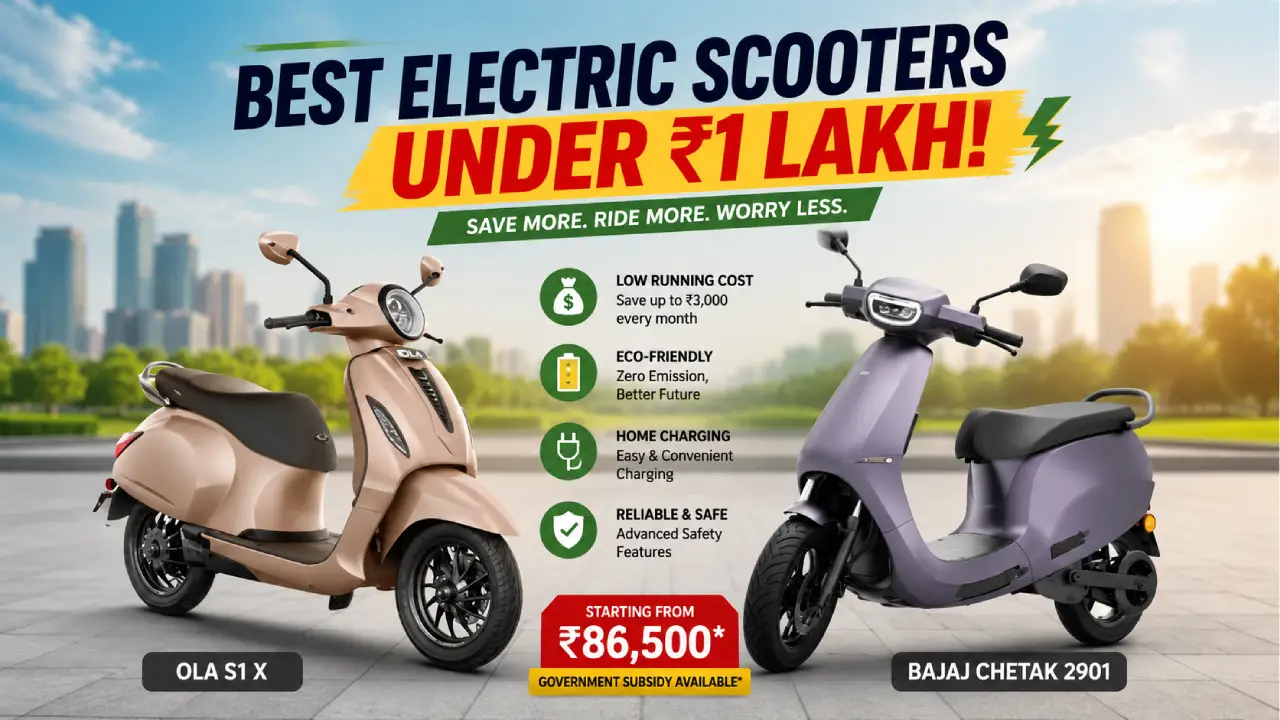
  • Petrol Prices Rising? Bring Home This Electric Scooter Under ₹1 Lakh, Save Big Every Month

    Petrol Prices Rising? Bring Home This Electric Scooter Under ₹1 Lakh, Save Big Every Month

    With petrol prices rising again, affordable electric scooters under ₹1 lakh are becoming a practical choice for city riders looking to reduce monthly fuel expenses.

    Best Electric Scooters Under ₹1 Lakh in India 2026

    The latest petrol price revision has once again increased the cost of daily commuting for millions of Indian riders. As fuel expenses continue to rise, many buyers are now considering electric scooters as a smarter long-term investment. Fortunately, several reliable electric scooters are available under ₹1 lakh, offering low running costs, practical range and modern features for urban use.

    Among the most searched options today are the Ola S1 X, Bajaj Chetak 2901 and TVS iQube. These models cater to office commuters, students and families who want to reduce dependence on petrol without spending a premium amount.

    Why Electric Scooters Are Becoming More Popular

    In cities such as Delhi, Mumbai and Bengaluru, the monthly fuel bill for a 125cc petrol scooter can easily cross ₹3,000–₹3,500 for riders covering around 30 km per day. In contrast, charging an electric scooter at home usually costs less than ₹500 per month.

    Moreover, electric scooters require fewer moving parts than conventional petrol scooters. As a result, routine maintenance costs are generally lower. This makes them attractive not only for fuel savings but also for reduced servicing expenses over time.

    Government incentives in some states further improve the value proposition, especially for entry-level electric scooters.

    Ola S1 X: The Most Affordable Option

    The Ola S1 X remains one of the most budget-friendly electric scooters currently available. Its lightweight design and simple feature set make it ideal for first-time EV buyers.

    Furthermore, the 2 kWh battery pack is sufficient for daily city commuting. Riders who travel short to medium distances every day can comfortably manage office trips, college runs and local errands without worrying about frequent charging.

    For buyers focused purely on affordability and low running costs, the Ola S1 X offers excellent value under the ₹90,000 mark in Delhi.

    Bajaj Chetak 2901: Premium Feel on a Budget

    The Bajaj Chetak 2901 brings a more premium design language to the budget EV segment. Its metal body construction gives it a sturdy and durable feel, which many buyers appreciate.

    Additionally, the larger 2.8 kWh battery pack offers a better real-world range than many entry-level competitors. Therefore, riders who regularly cover longer distances may find the Chetak 2901 more practical despite its slightly higher price. Bajaj’s widespread service network also adds confidence for long-term ownership.

    TVS iQube: Balanced Performance and Features

    The TVS iQube has built a strong reputation for refinement and reliability. The entry-level variant remains within the ₹1 lakh budget while offering a good mix of performance, comfort and technology.

    Moreover, TVS has focused on smooth acceleration and user-friendly riding characteristics. Consequently, the iQube appeals to both younger riders and family users looking for a dependable daily commuter.

    Its practical range and comfortable ergonomics make it suitable for regular urban use.

    Electric Scooter Price and Battery Comparison

    | Model | Battery | Approx. Price (Delhi) |
    | —————– | ——- | ——————— |
    | Ola S1 X | 2.0 kWh | ₹86,500 |
    | Bajaj Chetak 2901 | 2.8 kWh | ₹99,200 |
    | TVS iQube | 2.2 kWh | ₹98,900 |

    How Much Can You Save Every Month?

    Let’s assume a rider travels around 30 km every day.

    | Vehicle Type | Monthly Running Cost |
    | —————– | ——————– |
    | Petrol Scooter | ₹3,000–₹3,500 |
    | Electric Scooter | ₹400–₹500 |
    | Estimated Savings | ₹2,500–₹3,000 |

    Over a year, the savings can exceed ₹30,000, which is substantial for regular commuters.

    Monsoon Safety Tips for Electric Scooter Buyers

    During the rainy season, buyers should pay special attention to water protection and tyre grip.

    Before purchasing, check whether the scooter has an IP67-rated motor or battery protection. This helps protect critical electrical components from water exposure. However, riders should still avoid deep waterlogging, especially when the water level rises above the wheel hub.

    Additionally, inspect the brakes regularly. Many budget electric scooters use drum brakes, which require periodic maintenance for consistent performance in wet conditions.

    Which Electric Scooter Should You Buy?

    If your priority is the lowest purchase price and maximum savings, the Ola S1 X is difficult to ignore.

    If you want a more premium feel and better range, the Bajaj Chetak 2901 makes a strong case.

    Meanwhile, the TVS iQube is ideal for buyers looking for a balanced package of comfort, features and reliability.

    Ultimately, the right choice depends on your daily travel distance, charging availability at home and long-term ownership expectations.

    Final Verdict

    Rising petrol prices have made electric scooters more relevant than ever. For urban commuters, a budget EV can significantly reduce monthly transportation expenses while offering a quiet and convenient riding experience.

    Among the options under ₹1 lakh, the Ola S1 X stands out for affordability, the Bajaj Chetak 2901 impresses with its premium appeal, and the TVS iQube delivers the most balanced ownership experience.

    Before booking, compare real-world range, charging convenience and local dealer support. A well-chosen electric scooter can help you save money every single month while preparing for a future with higher fuel prices.

    FAQs

    Q1. Which electric scooter under ₹1 lakh offers the lowest running cost?

    The Ola S1 X generally offers one of the lowest running costs thanks to its efficient battery and lightweight design.

    Q2. Is the Bajaj Chetak 2901 suitable for daily office commuting?

    Yes. Its larger battery pack and comfortable ride make it a practical option for daily city commuting.

    Q3. Can electric scooters be used safely during the monsoon?

    Yes, provided the scooter has adequate water protection, good tyre grip and is not ridden through deep waterlogged roads.
  • TVS iQube vs Ather Rizta: Which Electric Scooter is Best for Kerala Monsoon in 2026?

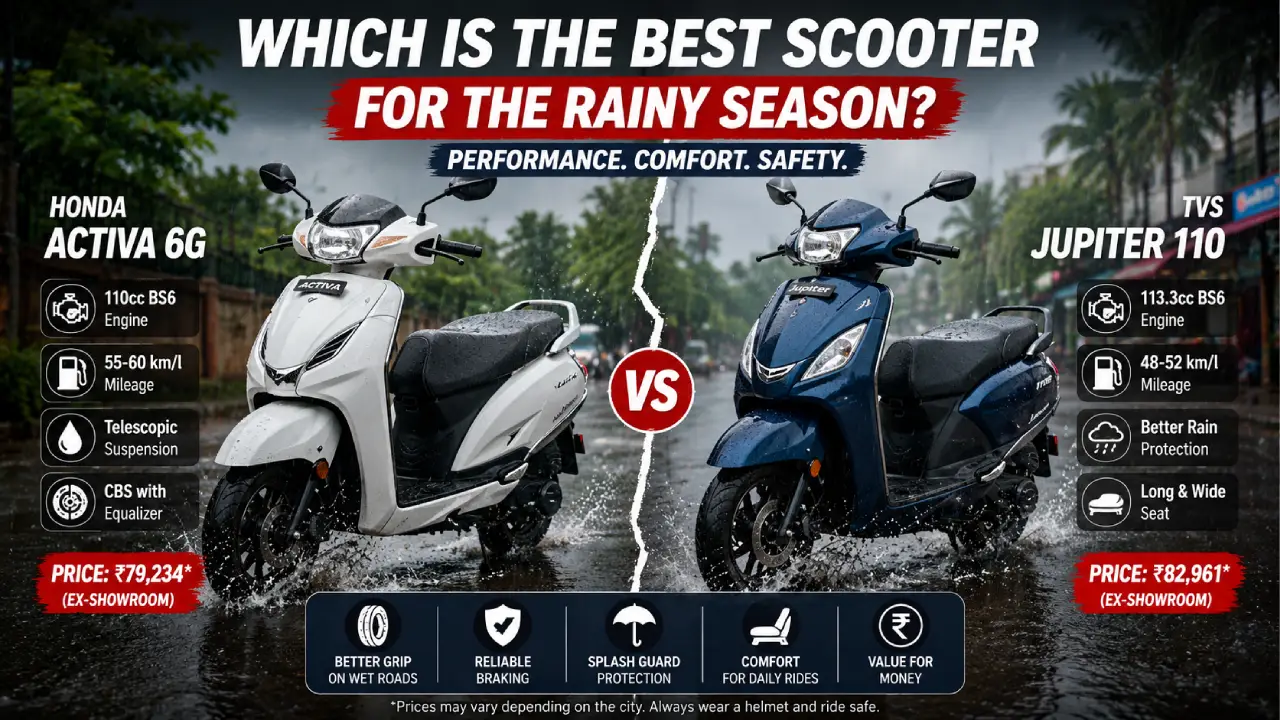
    TVS iQube vs Ather Rizta: Which Electric Scooter is Best for Kerala Monsoon in 2026?

    Heavy monsoon rains in Kerala have made choosing the right electric scooter more important than ever. Here’s a detailed comparison of the TVS iQube and Ather Rizta to help you pick the safest and most practical EV for rainy roads.

    TVS iQube vs Ather Rizta: Which Electric Scooter Performs Better in Kerala’s Monsoon?

    Kerala continues to experience heavy rainfall, and waterlogged roads have become a daily challenge for commuters in cities like Kochi and Thiruvananthapuram. As a result, many buyers are searching for electric scooters that can handle wet roads with confidence while offering dependable safety and everyday practicality.

    Among the most popular choices in the premium electric scooter segment are the TVS iQube and the Ather Rizta. Both models offer modern technology, comfortable riding positions, and practical features for daily commuting. However, when rain becomes a regular part of your journey, factors such as ground clearance, braking performance, traction, and overall ride stability become much more important than simply looking at range or design.

    Therefore, if you are planning to buy an electric scooter during the 2026 monsoon season, this comparison will help you understand which model suits your riding needs better.

    TVS iQube vs Ather Rizta Ground Clearance and Water-Friendly Design

    Ground clearance plays a crucial role when roads are filled with water. Even shallow waterlogging can become difficult if the scooter sits too low. In this comparison, the Ather Rizta enjoys a small but useful advantage.

    The Rizta offers approximately 165 mm of ground clearance, while the TVS iQube provides around 157 mm. Although the difference appears small on paper, those extra millimetres can help riders cross speed breakers, uneven roads, and moderate waterlogged sections more comfortably.

    Moreover, both scooters ride on 12-inch wheels that provide stable handling in wet conditions. However, riders should remember that no electric scooter is designed to travel through deep flooded roads. Water above the wheel hub should always be avoided to protect the electrical components.

    TVS iQube vs Ather Rizta Braking and Safety Features

    Safety becomes the biggest priority during heavy rain. Wet roads reduce tyre grip and increase braking distance. Fortunately, both scooters come equipped with front disc and rear drum brake combinations that deliver predictable stopping performance.

    The TVS iQube is well known for its smooth braking feel, making it suitable for city commuters who prefer gradual and controlled stopping. Meanwhile, the Ather Rizta benefits from refined regenerative braking calibration that helps reduce sudden wheel lock while recovering battery energy during deceleration.

    Additionally, selected variants of the Rizta offer Traction Control, which helps prevent wheel slip during rapid acceleration on slippery roads. This feature adds extra confidence for riders who frequently travel during heavy rain.

    LED lighting, wide tyres, and balanced chassis tuning further improve confidence on wet roads. Nevertheless, safe riding habits remain equally important regardless of the scooter you choose.

    TVS iQube vs Ather Rizta Comfort and Everyday Practicality

    Daily comfort matters just as much as safety, especially for riders covering long distances every day. The TVS iQube focuses on easy city commuting with a refined riding position, smooth suspension, and intuitive controls. Consequently, office commuters often appreciate its comfortable and stress-free riding experience.

    On the other hand, the Ather Rizta has been designed primarily with families in mind. It offers a longer seat, generous under-seat storage, and spacious ergonomics that make it suitable for carrying a passenger comfortably.

    Moreover, the Rizta’s larger storage compartment can easily accommodate helmets, shopping bags, or daily essentials. Therefore, families looking for practicality may find it more appealing.

    TVS iQube vs Ather Rizta Price Comparison

    Pricing remains one of the biggest deciding factors for Indian buyers. Although the final on-road cost depends on the city, insurance, and registration charges, both scooters compete in a similar price range.

    Feature TVS iQube Ather Rizta
    Ground Clearance 157 mm 165 mm
    Braking System Front Disc + Rear Drum Front Disc + Rear Drum
    Traction Control No Available on Select Variants
    Storage Space Good Larger Storage Capacity
    Expected Price Range ₹1.10 lakh onwards ₹1.20 lakh onwards

    Which Electric Scooter Should You Choose This Monsoon?

    If your daily commute mostly involves city traffic and you value smooth performance, refined ride quality, and an established service network, the TVS iQube continues to be an excellent option.

    However, if you frequently encounter waterlogged roads, carry family members, or need extra practicality, the Ather Rizta offers several advantages. Its higher ground clearance, spacious seating, larger boot, and available traction control make it especially attractive for monsoon riding.

    Before making your final purchase, it is always advisable to take a test ride, compare dealership offers, and verify delivery timelines. Moreover, check the warranty coverage for battery and motor components, as these remain among the most important aspects of long-term EV ownership.

    Final Verdict

    Both the TVS iQube and Ather Rizta are among the strongest electric scooter options available in India today. While the TVS iQube shines with its refined urban performance and comfortable ride, the Ather Rizta gains an edge during Kerala’s challenging monsoon season thanks to its higher ground clearance, family-friendly design, and additional safety technology.

    If your priority is everyday commuting with dependable reliability, the iQube remains a smart investment. However, riders looking for extra confidence on rain-soaked roads and greater practicality may find the Ather Rizta to be the better overall choice.

    Frequently Asked Questions

    Q1. Which scooter has better ground clearance for rainy roads?
    The Ather Rizta offers 165 mm of ground clearance, which is slightly higher than the TVS iQube’s 157 mm, making it more suitable for waterlogged roads.

    Q2. Is the TVS iQube good for daily office commuting?
    Yes. The TVS iQube delivers smooth city performance, comfortable ergonomics, and reliable braking, making it an excellent everyday commuter.

    Q3. Which electric scooter is better for family use?
    The Ather Rizta is generally better for families because of its spacious seat, larger storage capacity, and practical design.

  • Delhi EV Policy 2025: Save Up to ₹2.8 Lakh on Tata Nexon EV & Hyundai Creta EV-Full Benefits Explained

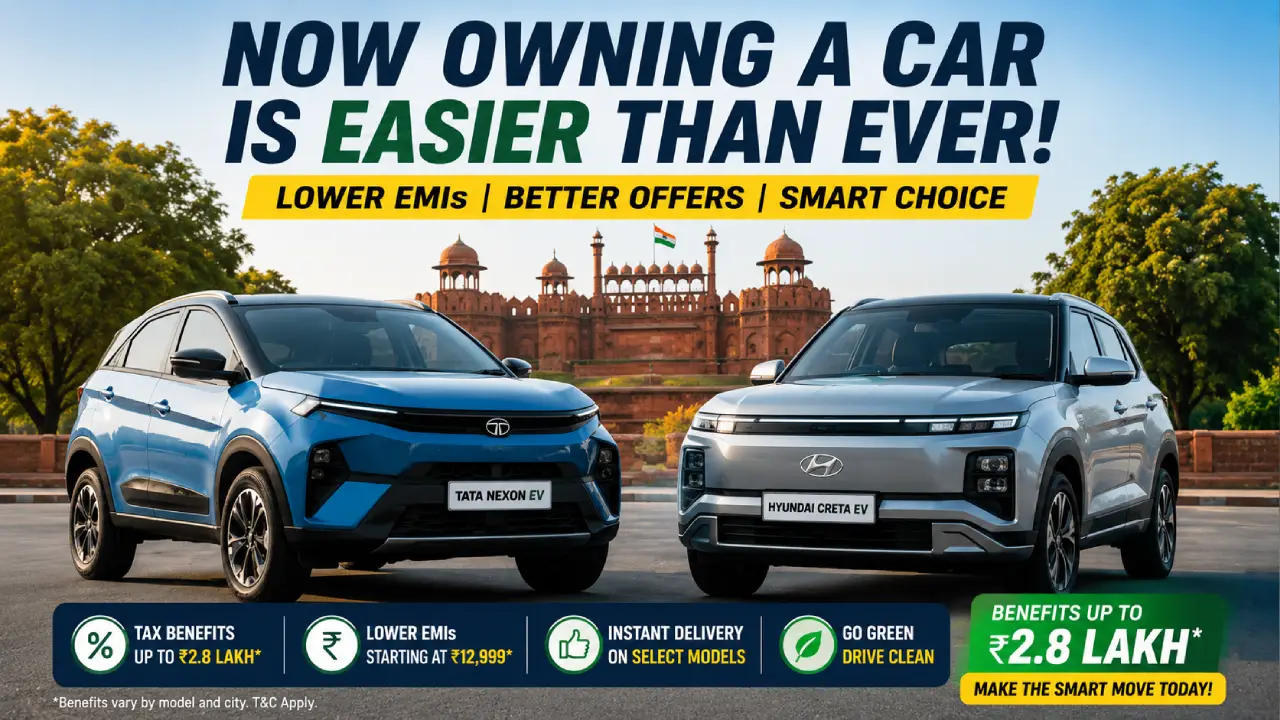
    Delhi EV Policy 2025: Save Up to ₹2.8 Lakh on Tata Nexon EV & Hyundai Creta EV-Full Benefits Explained

    Delhi’s latest EV policy has made electric SUV ownership more affordable than ever. With tax exemptions and lower registration costs, buyers can now save significantly while choosing premium electric vehicles.

    Delhi EV Policy 2025 Makes Electric SUVs More Affordable

    Delhi has introduced a revised electric vehicle policy that offers major financial benefits for eligible EV buyers. Under the new policy, qualifying electric vehicles receive relief on road tax and registration charges, helping reduce the overall ownership cost.

    For buyers considering a premium electric SUV, this update could make a noticeable difference in the final on-road price. Moreover, lower upfront costs also reduce monthly EMI, making electric mobility more accessible for families planning a long-term upgrade.

    Tata Nexon EV vs Hyundai Creta EV: Features, Range and Value

    The Tata Nexon EV remains one of India’s most popular electric SUVs thanks to its practical driving range, strong safety package, and proven ownership experience. It is well suited for both city driving and weekend highway trips.

    Meanwhile, the Hyundai Creta Electric focuses on premium comfort, modern technology, and faster charging capability. Buyers looking for a feature-rich SUV with a spacious cabin may find it a compelling option.

    Feature Tata Nexon EV Hyundai Creta Electric
    Estimated Tax Benefit* Up to ₹2.0 Lakh Up to ₹2.5 Lakh
    Real-World Range* 320–350 km 380–410 km
    Safety Features 6 Airbags, ESC 6 Airbags, ADAS
    Fast Charging Available Available

    *Figures are indicative and may vary depending on the selected variant, driving conditions, and applicable government policies.

    Lower EMI and Ownership Benefits

    Because the policy reduces the effective on-road price, buyers can also expect lower loan amounts and affordable monthly EMI. Therefore, financing a premium electric SUV becomes easier than before.

    Some dealerships may also offer exchange bonuses, finance offers, or promotional discounts. Buyers should compare dealership quotations before booking to maximize savings.

    Should You Buy an Electric SUV Now?

    If you regularly drive within Delhi-NCR and have convenient access to charging, an electric SUV can significantly reduce your long-term running costs. Additionally, electric vehicles require less routine maintenance than conventional petrol or diesel SUVs.

    However, before making your purchase, verify your eligibility under the latest Delhi EV policy, confirm applicable incentives, and compare dealership offers. Evaluating charging infrastructure, warranty coverage, and service support will help you make a better long-term decision.

    Keywords: Delhi EV Policy 2025, Tata Nexon EV, Hyundai Creta Electric, EV subsidy Delhi, Electric SUV India, Nexon EV vs Creta EV, EV tax exemption, Best electric SUV

    Frequently Asked Questions

    Q1. Who can benefit from Delhi’s new EV policy?

    Eligible buyers registering qualifying electric vehicles in Delhi can receive benefits according to the latest government policy and applicable conditions.

    Q2. Which SUV offers a longer driving range?

    The Hyundai Creta Electric is expected to offer a higher claimed driving range, while the Tata Nexon EV remains a strong performer in real-world city driving.

    Q3. Does the policy reduce monthly EMI?

    A lower effective purchase price can reduce the loan amount, which may result in lower monthly EMI depending on the finance plan.

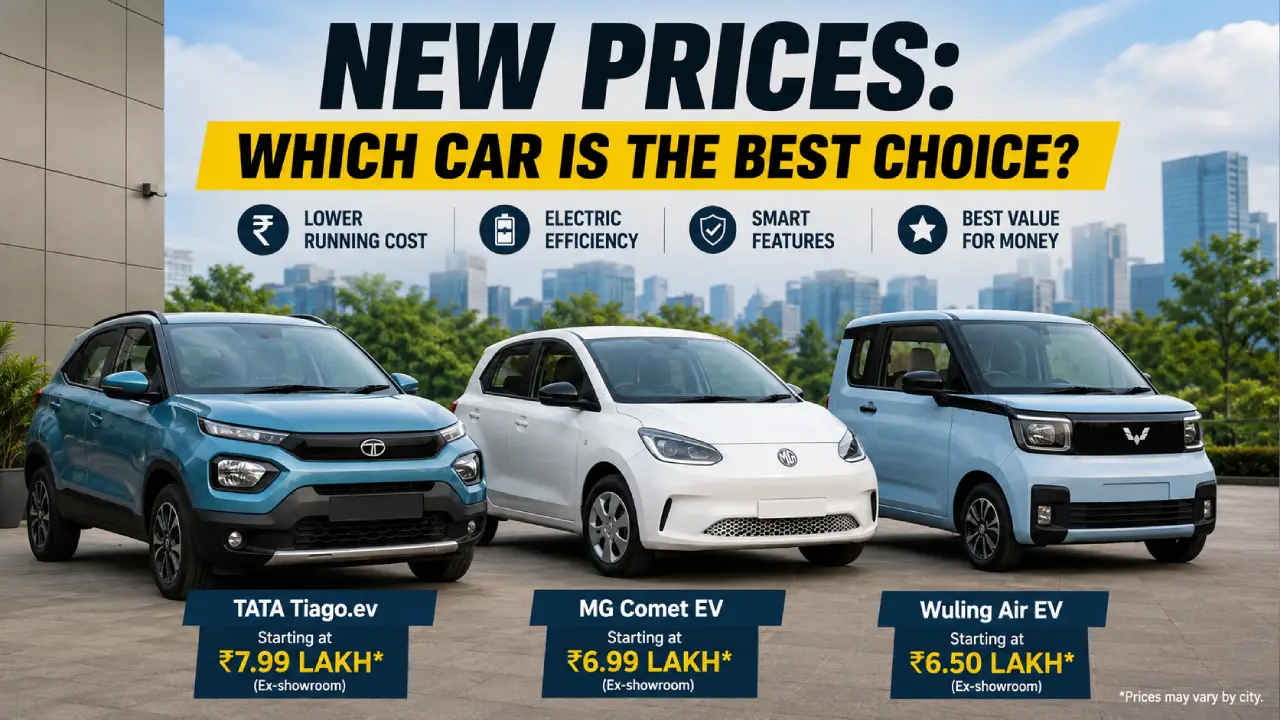
  • MG Comet EV vs Tata Tiago EV: Best Electric Car Under ₹10 Lakh After July Price Update?

    MG Comet EV vs Tata Tiago EV: Best Electric Car Under ₹10 Lakh After July Price Update?

    Electric car prices have been updated for July, making this the perfect time to compare India’s most affordable EVs. If you’re planning to buy an electric car under ₹10 lakh, here’s everything you need to know before booking.

    MG Comet EV vs Tata Tiago EV: July Price Update Explained

    The Indian electric vehicle market continues to grow as manufacturers refresh their pricing for the new quarter. Following the latest July update, buyers comparing the MG Comet EV and Tata Tiago.ev should evaluate not only the purchase price but also the overall ownership cost.

    Both models remain among the most affordable electric cars available in India. Moreover, they offer modern features, low running costs, and excellent value for daily city driving. If your local dealer still has older inventory, you may also find attractive discounts before the latest pricing is fully implemented.

    Features and Variants Comparison

    The MG Comet EV continues to attract urban buyers with its compact dimensions and easy maneuverability. The Pace and Play variants offer features such as a digital instrument cluster, connected technology, and regenerative braking.

    Meanwhile, the Tata Tiago.ev remains one of the most practical electric hatchbacks in its segment. It offers multiple battery options, better highway usability, and fast-charging support, making it suitable for both city commuting and occasional long-distance travel.

    Model Variant Ex-Showroom Price* Estimated Delhi On-Road Price*
    MG Comet EV Pace ₹6.99 Lakh ₹7.40 Lakh
    MG Comet EV Play ₹7.88 Lakh ₹8.35 Lakh
    Tata Tiago.ev XE MR ₹7.99 Lakh ₹8.45 Lakh

    *Prices are indicative and may vary depending on city, taxes, registration charges, insurance, and dealer offers.

    Running Cost and Monsoon Performance

    Electric vehicles remain significantly cheaper to run than petrol or CNG cars. However, real-world driving range can reduce during the monsoon due to continuous AC usage, wet road conditions, and heavy traffic.

    Therefore, buyers should inspect tyre condition, brake performance, battery health, and charging equipment during the Pre-Delivery Inspection (PDI). Many dealerships currently have sufficient stock, allowing deliveries within a week in several cities.

    Which Electric Car Offers Better Value?

    If you mainly drive within crowded urban areas, the MG Comet EV is an excellent choice thanks to its compact size, lower purchase price, and effortless city driving experience.

    On the other hand, the Tata Tiago.ev offers a larger cabin, stronger performance, better highway capability, and faster charging support. Buyers looking for a more versatile electric hatchback may find it to be the better long-term investment.

    Before making your final decision, compare dealership discounts, finance offers, charging options, and applicable state EV incentives. Leftover inventory from the previous month may also help you secure additional savings.

    Frequently Asked Questions

    Q1. Which is cheaper, MG Comet EV or Tata Tiago EV?

    The MG Comet EV starts at a lower price, while the Tata Tiago.ev offers more space and additional practicality.

    Q2. Which EV is better for city driving?

    The MG Comet EV is ideal for city traffic because of its compact dimensions and easy parking.

    Q3. Does monsoon weather affect EV range?

    Yes. Heavy rain, traffic congestion, continuous air-conditioning, and wet road conditions can slightly reduce real-world driving range.

  • Delhi EV Subsidy Portal Goes Live! Buy an Electric Car Cheaper Than Petrol & CNG in 2025

    Delhi EV Subsidy Portal Goes Live! Buy an Electric Car Cheaper Than Petrol & CNG in 2025

    The Delhi EV Subsidy Portal is now live, making electric cars more affordable than ever. With tax benefits, lower running costs, and government incentives, this could be the perfect time to switch from petrol or CNG to an electric vehicle.

    Delhi EV Subsidy Portal Goes Live: What It Means for Buyers

    Electric vehicle adoption is gaining momentum in Delhi as the government has activated its EV subsidy portal for new applications. Buyers can now take advantage of incentives that significantly reduce the overall cost of owning an electric car.

    One of the biggest advantages is the exemption from road tax and registration charges for eligible EVs. As a result, the on-road price becomes much more attractive compared to conventional petrol-powered vehicles. Therefore, buyers planning to purchase a new car should carefully compare ownership costs before making a decision.

    Why Electric Cars Are Becoming More Affordable

    While petrol and CNG fuel prices remain relatively stable, electric cars continue to offer the lowest daily running expenses, especially for owners who charge their vehicles at home.

    Moreover, the total cost of ownership is now easier to justify thanks to government incentives and lower maintenance requirements. However, buyers should note that hybrid vehicles are not eligible for these EV-specific benefits under the current policy.

    Best Value Electric Cars Under ₹15 Lakh

    If your budget is below ₹15 lakh, the Tata Tiago.ev and MG Comet EV are among the strongest choices available in the market. Both models benefit from lower registration costs and affordable running expenses.

    Meanwhile, dealers across Delhi-NCR expect higher showroom visits and test-drive bookings following the subsidy announcement. Entry and mid-spec variants are currently available at many dealerships, although premium colour options may have slightly longer waiting periods.

    Car Model Fuel Type Estimated Delhi Price Estimated Running Cost
    MG Comet EV Electric ₹7.4 Lakh ₹0.80/km
    Tata Tiago.ev Electric ₹8.5 Lakh ₹1.00/km
    Maruti Celerio CNG CNG ₹7.2 Lakh ₹2.80/km
    Maruti Swift Petrol ₹7.6 Lakh ₹5.50/km

    EV vs CNG vs Petrol: Which Saves More?

    Electric vehicles offer the lowest running costs for drivers covering high monthly distances. Charging at home further reduces daily expenses, making EV ownership highly economical over the long term.

    On the other hand, petrol cars remain a sensible option for buyers with lower monthly usage because of their lower purchase complexity and widespread service network. CNG vehicles continue to provide an excellent balance between affordability and fuel savings for regular commuters.

    Final Verdict

    If you drive frequently within the city and have access to home charging, an electric car is likely to deliver the biggest savings over time. Models like the MG Comet EV and Tata Tiago.ev now offer even better value thanks to Delhi’s latest EV incentives.

    However, if charging infrastructure is not convenient for you, a CNG hatchback still remains a practical and cost-effective alternative. Before booking your vehicle, compare available subsidies, dealership offers, and your expected annual mileage to make the smartest financial decision.

    Frequently Asked Questions

    Q1. Who can benefit from the Delhi EV subsidy?

    Eligible buyers purchasing qualifying electric vehicles under the Delhi EV policy can receive applicable incentives, including exemptions on road tax and registration charges, subject to government rules.

    Q2. Which electric car is the best under ₹10 lakh?

    The MG Comet EV and Tata Tiago.ev are among the most popular and affordable electric cars in this price segment.

    Q3. Is an EV cheaper to run than a CNG car?

    Yes. In most cases, electric cars have a lower per-kilometre running cost than CNG vehicles, especially when charged at home.

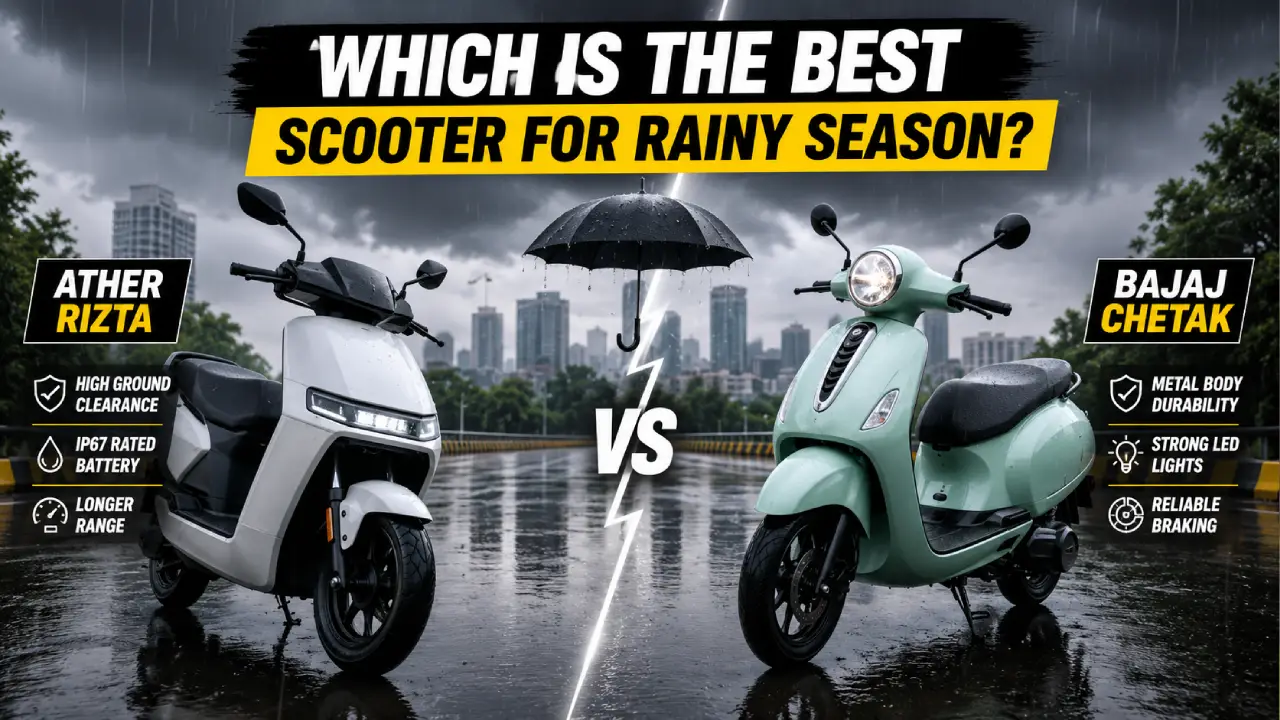
  • Ather Rizta vs Bajaj Chetak: Which Electric Scooter Is Safer in Monsoon? Price, Range & Rain Performance

    Ather Rizta vs Bajaj Chetak: Which Electric Scooter Is Safer in Monsoon? Price, Range & Rain Performance

    Planning to buy an electric scooter this rainy season? Compare the Ather Rizta and Bajaj Chetak based on monsoon safety, real-world range, water resistance, pricing, and features to choose the best EV for daily commuting.

    Ather Rizta vs Bajaj Chetak: Built for Rainy Roads

    With the India Meteorological Department (IMD) issuing heavy rainfall alerts across several cities, many buyers are looking for electric scooters that can handle wet roads confidently. The Ather Rizta and Bajaj Chetak are among the most popular premium electric scooters designed for everyday urban commuting.

    Both scooters feature weather-resistant battery systems and durable electric powertrains. Moreover, they are built to offer dependable performance during the monsoon season when road conditions become more challenging.

    Ather Rizta vs Bajaj Chetak: Battery Safety and Water Resistance

    Heavy rainfall and waterlogged roads can affect any vehicle if used carelessly. The Ather Rizta offers generous ground clearance along with one of the largest seats in its segment, making it a practical choice for families and daily riders.

    On the other hand, the Bajaj Chetak stands out with its strong all-metal body and premium build quality. Both scooters use high-rated battery and motor protection to help safeguard electrical components during rainy weather. However, riders should always avoid riding through water that reaches above the wheel axle.

    Ather Rizta vs Bajaj Chetak: Price, Range and EMI Comparison

    Feature Ather Rizta (3.7 kWh) Bajaj Chetak Premium
    On-Road Price (Delhi) ₹1.55 Lakh ₹1.52 Lakh
    Estimated Rainy Season Range 115–125 km 105–110 km
    Recommended Water Level Below Wheel Axle Below Wheel Axle
    Braking System Front & Rear Disc Front Disc + Rear Drum
    Starting EMI* From ₹3,000/month From ₹3,000/month

    *EMI may vary depending on the lender, loan tenure, and down payment.

    Monsoon Safety Features You Should Consider

    Besides battery protection, tyre grip and braking performance play an important role during the rainy season. The Ather Rizta comes with a wider rear tyre, which improves stability on slippery roads. Meanwhile, the Bajaj Chetak offers bright LED lighting that enhances visibility during heavy rain and low-light conditions.

    Experts also recommend checking the charging port for moisture before plugging in the charger. Furthermore, avoid charging the scooter immediately after riding through heavy rain if the charging connector appears wet.

    Which Electric Scooter Should You Buy?

    If you want a spacious family scooter with modern connected features and longer practical range, the Ather Rizta is an excellent option. Its comfortable seating and storage capacity make it ideal for everyday commuting.

    However, if you prefer premium build quality, classic styling, and a trusted ownership experience, the Bajaj Chetak remains a strong contender. Before making your purchase, compare warranty coverage, battery protection, water damage terms, and service support offered by your local dealership.

    Choosing the right electric scooter is not just about price. A combination of safety, reliability, battery protection, and practical performance will provide better value throughout the monsoon season.

    Frequently Asked Questions (FAQs)

    Q1. Which electric scooter is better for monsoon riding?
    Both Ather Rizta and Bajaj Chetak are suitable for rainy conditions when ridden responsibly. Avoid deep water and follow the manufacturer’s safety recommendations.

    Q2. Can I ride an electric scooter through waterlogged roads?
    It is recommended to avoid riding through water above the wheel axle, as excessive water exposure may damage electrical components.

    Q3. Which scooter offers better practical range?
    The Ather Rizta generally offers a slightly longer real-world range, while the Bajaj Chetak focuses on premium build quality and a refined riding experience.

  • Bought Your First Electric Car? 7 Essential EV Ownership Tips Every New Driver Should Know

    Bought Your First Electric Car? 7 Essential EV Ownership Tips Every New Driver Should Know

    Introduction: Buying your first electric vehicle can feel like a big step. However, once you understand charging, driving habits, and battery care, EV ownership becomes much easier than most people expect.

    First Month of EV Ownership: What Every New Electric Car Owner Should Know

    Switching from a petrol or diesel car to an electric vehicle (EV) can seem overwhelming at first. Questions about charging, driving range, and battery life are common among first-time buyers. Fortunately, most new EV owners discover that daily driving is much simpler than they imagined.

    Unlike conventional vehicles, EVs have fewer moving parts, require less maintenance, and deliver instant acceleration. Once you spend a few weeks with an electric car, driving it quickly becomes second nature.

    Take Time to Learn Your EV

    Every electric vehicle comes with its own technology, settings, and charging options. Therefore, one of the first things every new owner should do is read the owner’s manual.

    Modern EVs include advanced infotainment systems, regenerative braking controls, drive modes, smartphone connectivity, and battery management features. Spending a little time learning these functions will help you enjoy a smoother ownership experience.

    Moreover, customizing driver settings, charging schedules, and safety features early on makes the vehicle more convenient for everyday use.

    Take a deep breath
    Take a deep breath

    Home Charging Makes Daily Driving Easier

    The biggest advantage of owning an EV is the ability to charge it at home. Instead of visiting a fuel station every week, you simply plug the car in overnight and wake up with a fully charged battery.

    Most drivers travel less than 50 miles (80 km) per day, meaning even a standard household outlet may be enough for light daily use. However, installing a Level 2 home charger significantly reduces charging time and is recommended for drivers who regularly cover longer distances.

    Charging at home is usually cheaper than using public charging stations and adds convenience to your daily routine.

    Charging Option Best For
    Standard Home Outlet Short daily commutes
    Level 2 Home Charger Regular daily driving
    DC Fast Charger Long-distance travel
    Locate local chargers
    Locate local chargers

    Know Where Public Chargers Are Located

    Even if you mainly charge at home, it’s important to know where nearby public charging stations are located. Apps like ChargePoint, Electrify America, EVgo, and Blink help drivers locate available chargers, monitor charging status, and make payments directly from their smartphones.

    Meanwhile, many shopping malls, supermarkets, restaurants, hotels, and office buildings now offer EV charging facilities. Planning charging stops around your regular routine can save both time and money.

    For long road trips, using your vehicle’s built-in navigation system can help identify compatible fast chargers along your route.

    Take it easy at first
    Take it easy at first

    Spend a Few Weeks Driving Locally First

    Although modern electric vehicles are capable of long-distance travel, it’s a good idea to spend your first few weeks driving close to home. This gives you time to understand your car’s charging speed, battery consumption, regenerative braking, and overall driving range before heading out on extended journeys.

    Most EV manufacturers provide comprehensive battery warranties, so reliability should not be a major concern. Still, becoming familiar with your vehicle before taking longer trips helps build confidence behind the wheel.

    Watch that right foot
    Watch that right foot

    Drive Smoothly to Get the Best Driving Range

    One of the first things new EV owners notice is how quickly electric cars accelerate. Unlike petrol or diesel vehicles, electric motors deliver instant torque, making even entry-level EVs feel quick off the line.

    However, aggressive acceleration and high-speed driving can reduce your driving range. Smooth throttle inputs, maintaining steady speeds, and using regenerative braking efficiently can help maximize battery performance. Therefore, adopting a relaxed driving style not only improves efficiency but also extends the distance you can travel on a single charge.

    Understand Regenerative Braking

    Regenerative braking is one of the biggest differences between electric and conventional vehicles. Instead of wasting energy during braking, the electric motor converts part of that energy back into electricity and stores it in the battery.

    Many EVs also offer adjustable regenerative braking levels or one-pedal driving. After a few days behind the wheel, most drivers find this system comfortable and appreciate the smoother driving experience it provides.

    Feature Benefit
    Instant Torque Quick and smooth acceleration
    Regenerative Braking Improves driving efficiency
    Home Charging Lower running costs
    DC Fast Charging Convenient for highway trips

    Don’t Believe Every EV Myth

    New EV owners often hear misconceptions about battery life, charging, or long-distance travel. In reality, today’s electric vehicles are far more capable than many people realize. Most modern EVs offer long battery warranties, advanced battery management systems, and access to an expanding public charging network.

    Moreover, battery technology continues to improve every year, making electric vehicles more practical for daily commuting and even cross-country travel.

    Plan Longer Trips in Advance

    Although daily driving rarely requires public charging, planning becomes more important during long journeys. Most EV navigation systems automatically recommend charging stops based on battery level, traffic conditions, and charger availability.

    Before starting a road trip, check the charging locations along your route and keep one or two backup stations in mind. This simple habit makes long-distance EV travel much less stressful.

    Final Thoughts

    The first month of EV ownership is mostly about building confidence. Once you become familiar with charging, battery management, and regenerative braking, driving an electric vehicle feels just as natural as driving a conventional car. With lower maintenance costs, quiet performance, and an expanding charging network, owning an EV becomes easier with every journey.

    Keywords: First EV Ownership, Electric Vehicle Guide, EV Charging Tips, Home EV Charging, Regenerative Braking, EV Range Tips, Electric Car Ownership, EV Road Trip

    Frequently Asked Questions

    Q1. Is it difficult to own an electric vehicle?
    No. Most owners adjust within a few weeks, especially if they can charge at home regularly.

    Q2. Should I install a Level 2 charger?
    Yes, if you drive long distances regularly. It significantly reduces charging time compared to a standard household outlet.

    Q3. Does fast charging damage the battery?
    Occasional DC fast charging is safe. For everyday charging, most manufacturers recommend using home AC charging whenever possible.

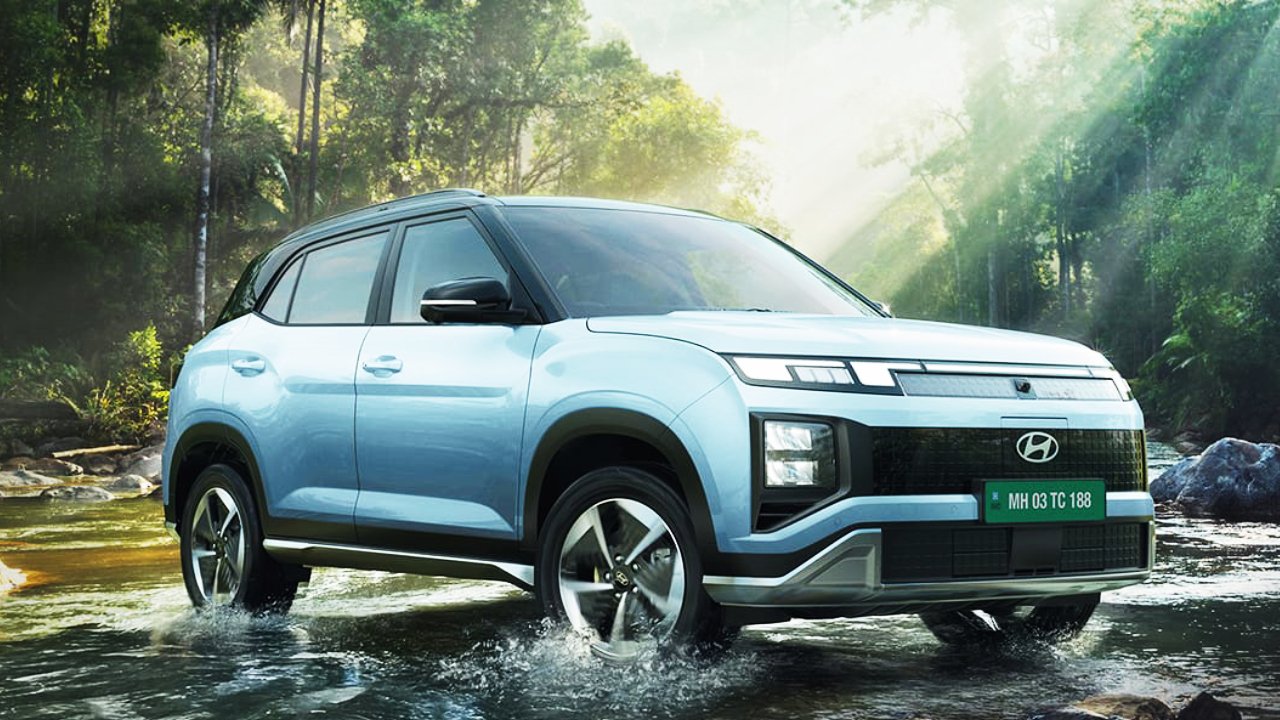
  • Hyundai Creta Electric Now Starts at Rs 10.99 Lakh With New Battery Subscription Plan

    Hyundai Creta Electric Now Starts at Rs 10.99 Lakh With New Battery Subscription Plan

    Hyundai Motor India has introduced a new Battery-as-a-Service (BaaS) option for the Hyundai Creta Electric, making the electric SUV significantly more affordable for buyers. Under this new ownership model, the starting price of the Creta EV has been reduced to Rs 10.99 lakh (ex-showroom), while customers pay separately for battery usage based on the distance they drive.

    For buyers who prefer to own the vehicle and battery together, the Hyundai Creta Electric will continue to be available at a starting price of Rs 18.03 lakh (ex-showroom).

    Hyundai Creta EV BaaS Scheme Explained

    The Battery-as-a-Service programme is designed to lower the upfront purchase cost of the electric SUV. Instead of buying the battery outright, customers can rent it by paying Rs 3.90 per kilometre. This model is expected to make EV ownership more accessible, especially for buyers looking to reduce their initial investment.

    With this move, Hyundai joins the growing list of automakers offering flexible ownership options to encourage electric vehicle adoption in India.

    New Features Added to the Creta Electric

    Alongside the new pricing structure, Hyundai has also updated the Creta Electric with an integrated side step on selected variants, making it easier for passengers to get in and out of the SUV.

    The company has also revised the charging equipment. Every variant now comes with a 7.4kW AC wall charger as standard. Earlier, some higher-end variants were equipped with an 11kW charger. However, Hyundai continues to provide an onboard charging system across the entire lineup.

    Battery Options, Driving Range and Performance

    The Hyundai Creta Electric is available with two battery pack choices—a 42kWh unit and a larger 51.4kWh battery.

    The smaller battery delivers a claimed driving range of 420 km on a full charge, while the larger battery offers an impressive 510 km of certified range.

    Both versions use a single electric motor. The standard model produces 135 PS, while the long-range variant generates 171 PS, offering stronger acceleration and better highway performance.

    The long-range version can accelerate from 0 to 100 km/h in just 7.9 seconds, making it one of the quickest electric SUVs in its segment.

    Fast Charging and Drive Modes

    Charging the Creta Electric is convenient with DC fast charging support. Using a compatible fast charger, the battery can be recharged from 10% to 80% in approximately 58 minutes.

    Drivers can also choose between Eco, Normal, and Sport drive modes to match different road conditions and driving styles.

    Premium Features and Safety Technology

    The Hyundai Creta Electric offers a premium cabin loaded with modern technology. It comes equipped with dual 10.25-inch digital displays for the infotainment system and instrument cluster, along with a redesigned steering wheel inspired by Hyundai’s global EV models.

    Other notable features include a panoramic sunroof, ventilated and powered front seats, automatic climate control, Vehicle-to-Load (V2L) functionality, a 360-degree camera, a digital key, and connected car technology.

    On the safety front, the SUV is equipped with Level 2 Advanced Driver Assistance Systems (ADAS). Key features include Lane Keeping Assist, Forward Collision Warning, Blind Spot Collision Warning, and Smart Cruise Control with Stop & Go, providing added confidence on both city roads and highways.

    Final Thoughts

    With the introduction of the Battery-as-a-Service programme, Hyundai has made the Creta Electric far more accessible to Indian buyers. The combination of a lower entry price, flexible battery subscription model, long driving range, premium features, and advanced safety technology makes the Creta EV a compelling option in the growing electric SUV market.