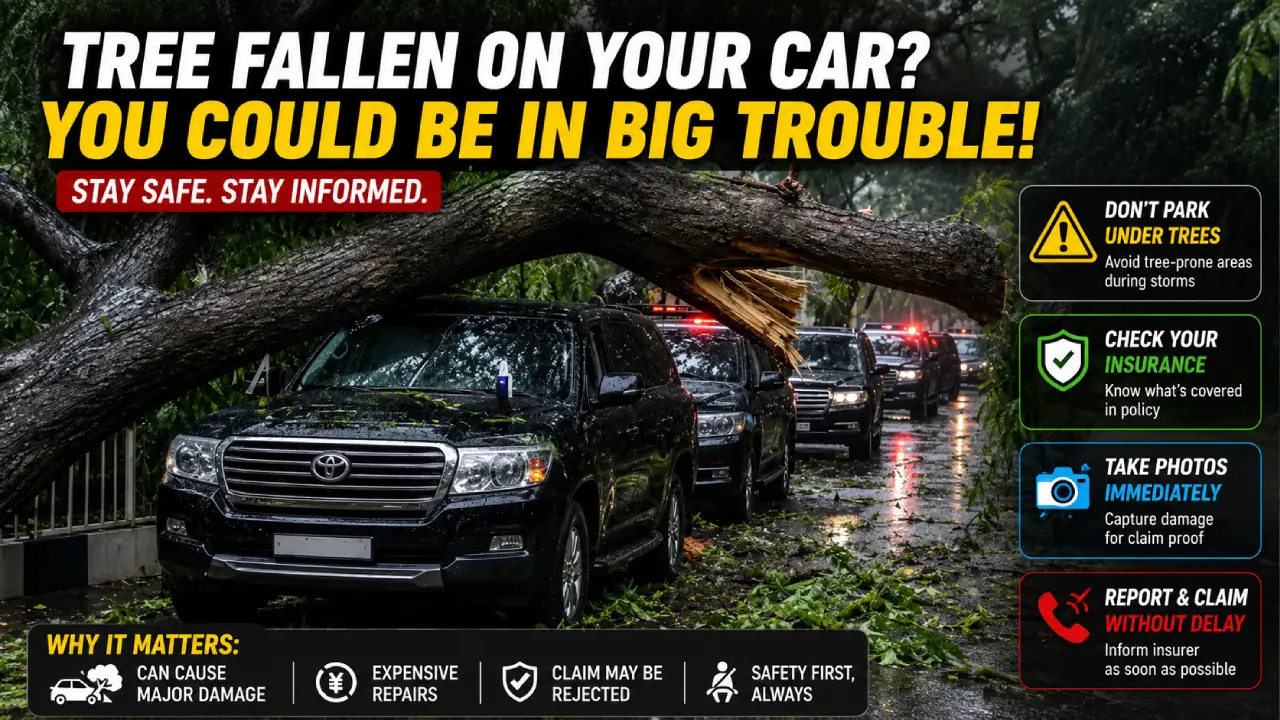
Mumbai’s Red Alert has once again highlighted how unpredictable the monsoon can be. Reports of a tree falling near a VVIP convoy have sparked discussions about SUV safety, armored vehicles, and essential precautions for every driver during heavy rainfall.
Mumbai Red Alert: What Makes VVIP SUVs Different?
Heavy rain, strong winds, and falling trees create serious risks on city roads. While reports about a tree falling near a VVIP convoy have drawn public attention, the incident also reminds everyday drivers that severe weather can challenge any vehicle.
Unlike regular SUVs, armored VVIP vehicles are designed with reinforced body panels, stronger roof structures, and sealed electrical systems. These upgrades improve occupant protection and help the vehicle withstand harsh operating conditions. Moreover, many of these vehicles feature run-flat tyres and advanced suspension systems for added stability.
However, even the most advanced SUVs cannot eliminate every risk during extreme weather. Drivers must always follow weather advisories and avoid unnecessary travel during Red Alert conditions.
Armored SUV vs Standard SUV: Key Safety Differences
Premium armored SUVs include several engineering upgrades beyond bullet resistance. These vehicles also receive reinforced underbody protection, water-resistant electrical components, and specially designed air intake systems to reduce the chances of water entering the engine.
| Feature | Armored SUV | Standard SUV |
|---|---|---|
| Roof Protection | Reinforced armored structure | Standard steel body |
| Electrical System | Sealed and weather protected | Regular wiring layout |
| Tyres | Run-flat technology | Tubeless tyres |
| Water Protection | Enhanced sealing | Standard protection |
Meanwhile, armored SUVs are significantly heavier than regular models. Because of this extra weight, braking distances can increase on wet roads. Therefore, professional drivers operating these vehicles maintain larger safety gaps and reduce speed during heavy rain.
Monsoon Driving Tips Every SUV Owner Should Follow
You do not need an armored vehicle to improve your safety. Instead, regular maintenance and cautious driving make a much bigger difference during the rainy season.
Before starting your journey, inspect tyre tread depth, windshield wipers, headlights, and brakes. Moreover, avoid driving through flooded roads if the water level approaches the wheel hub, as water entering the engine can lead to expensive repairs.
Keep a safe distance from large vehicles and VVIP convoys. Sudden braking on slippery roads can easily result in rear-end collisions. Additionally, never park your SUV under old or weak trees during storms because falling branches remain one of the biggest monsoon hazards.
Insurance and Vehicle Protection During Heavy Rain
Comprehensive insurance with an Engine Protection Add-on can offer valuable financial protection if your vehicle suffers water-related engine damage. Likewise, check whether your policy covers damage caused by falling trees, storms, or flying debris.
Although modern SUVs include advanced safety technologies like Electronic Stability Control (ESC), multiple airbags, and traction control, responsible driving remains the most effective safety feature. Staying updated with weather alerts and avoiding unnecessary travel during severe storms is always the smarter choice.
Frequently Asked Questions
Q1. Are armored SUVs completely safe during heavy rain?
No. Armored SUVs offer additional structural protection, but they are still affected by flooding, falling trees, and slippery roads.
Q2. Should I drive through waterlogged roads in my SUV?
It is best to avoid flooded roads whenever possible. Deep water can damage the engine and electrical systems regardless of the vehicle type.
Q3. Which insurance cover is useful during the monsoon?
A comprehensive policy with an Engine Protection Add-on and natural calamity coverage provides better financial protection during heavy rains.
Leave a Reply