Author: Amit Kumar

  • Beat Delhi’s Heat! Best 7-Seater Family Cars Under ₹15 Lakh with Powerful Rear AC Cooling

    Beat Delhi’s Heat! Best 7-Seater Family Cars Under ₹15 Lakh with Powerful Rear AC Cooling

    Introduction: Delhi’s soaring summer temperatures have made cabin cooling one of the most important factors while buying a family car. If your budget is under ₹15 lakh, these 7-seater MPVs offer excellent rear AC performance, spacious interiors, and everyday practicality.

    Buying a family car today is no longer just about mileage or engine performance. With temperatures regularly crossing 40°C in many parts of North India, especially Delhi-NCR, buyers are paying more attention to cabin cooling and passenger comfort. For families travelling with children or elderly members, a powerful air-conditioning system can make every journey far more comfortable.

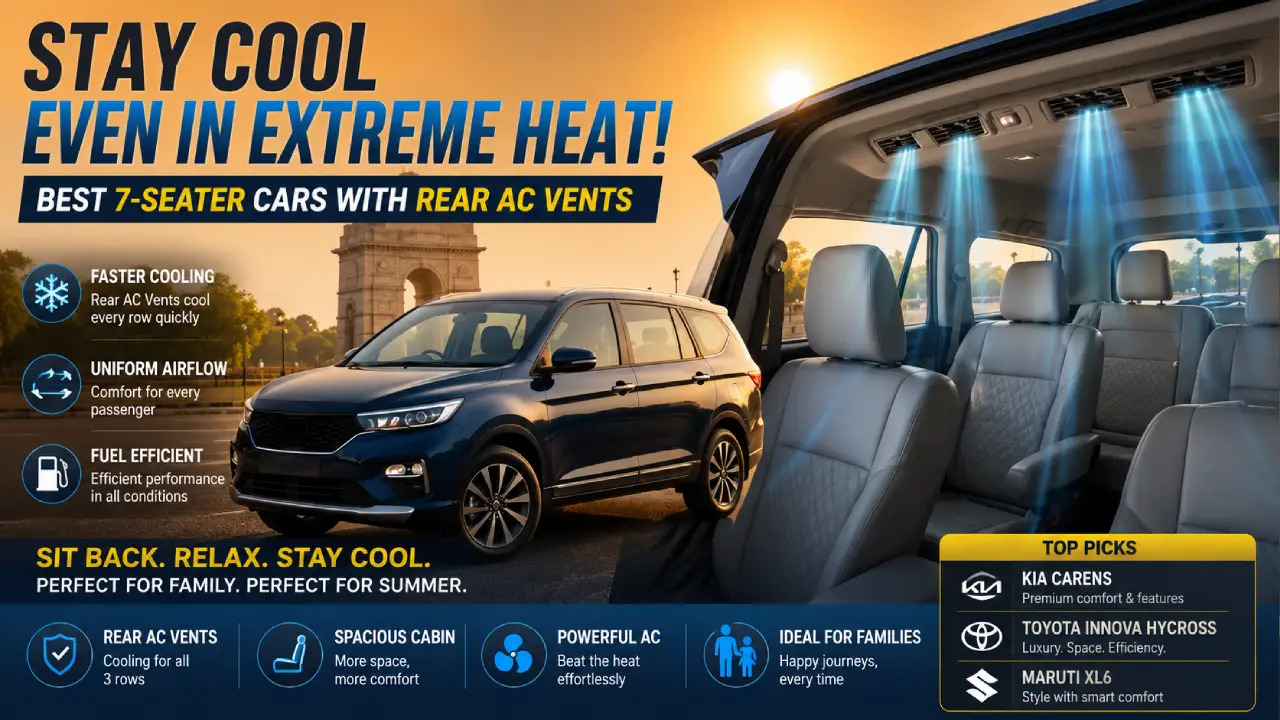
    Fortunately, several affordable seven-seater MPVs now offer roof-mounted rear AC vents, separate blower controls, and improved air circulation. These features help cool the second and third rows much faster than conventional front-only AC systems. As a result, passengers sitting at the back no longer have to wait several minutes before the cabin becomes comfortable.

    If your budget is below ₹15 lakh, models like the Kia Carens, Maruti Suzuki Ertiga, Toyota Rumion, and Renault Triber deserve serious consideration. Each offers a practical balance of comfort, features, and value for money.

    Kia Carens Rear AC and Premium Cabin Comfort

    The Kia Carens has become one of India’s most popular family MPVs because of its spacious interior and well-designed cooling system. It features roof-mounted rear AC vents that distribute cool air evenly across all three rows instead of directing airflow at just one passenger.

    Moreover, many variants include UV-cut glass that helps reduce heat entering the cabin. This allows the air-conditioning system to cool the interior more quickly, even after the vehicle has been parked in direct sunlight. Combined with comfortable seating and generous legroom, the Carens is an excellent choice for long family trips.

    Maruti Suzuki Ertiga: A Trusted Family Favourite

    The Maruti Suzuki Ertiga continues to dominate the MPV segment thanks to its reliability, fuel efficiency, and low maintenance costs. More importantly for summer driving, it comes with roof-mounted rear AC vents that provide effective cooling for passengers in the second and third rows.

    The Ertiga also benefits from Maruti Suzuki’s wide service network across India, making ownership convenient even in smaller towns. Therefore, families looking for dependable performance and affordable maintenance often place the Ertiga at the top of their shortlist.

    Toyota Rumion Offers Familiar Comfort with Premium Touches

    The Toyota Rumion shares its platform with the Ertiga but adds Toyota’s premium styling and ownership experience. It also features roof-mounted rear air-conditioning vents, ensuring comfortable airflow throughout the cabin.

    In addition, Toyota’s reputation for long-term reliability makes the Rumion attractive for buyers planning to keep their vehicle for several years. The refined interior, comfortable seats, and smooth driving experience further strengthen its appeal.

    Renault Triber Delivers Big Value at a Small Price

    If affordability is your highest priority, the Renault Triber stands out as one of the best seven-seater cars in India. Despite its compact dimensions, it offers a surprisingly spacious cabin with dedicated AC vents for rear passengers.

    The second row receives pillar-mounted vents, while roof-mounted vents help cool the third row efficiently. Consequently, every passenger enjoys improved airflow during hot summer journeys. Its flexible seating arrangement also makes the Triber highly practical for urban families.

    Best 7-Seater Cars Under ₹15 Lakh

    Model Rear AC System Starting Price*
    Kia Carens Roof-Mounted Diffused Vents ₹10.60 Lakh
    Maruti Suzuki Ertiga Roof-Mounted Rear AC ₹8.97 Lakh
    Toyota Rumion Roof-Mounted Rear AC ₹10.54 Lakh
    Renault Triber Pillar & Roof AC Vents ₹6.15 Lakh

    *Approximate ex-showroom prices.

    Things to Check Before Buying

    Before finalising your purchase, visit the dealership during the afternoon when temperatures are highest. Ask for a test drive and observe how quickly the cabin cools after the car has been parked in the sun. This simple check gives a better idea of real-world AC performance than reading specifications alone.

    Additionally, compare blower speed, rear airflow, cabin insulation, and window glass quality. Cars equipped with heat-rejecting glass generally keep the cabin cooler and reduce the load on the air conditioner. Buyers should also compare waiting periods, warranty coverage, and available finance offers before making a decision.

    Final Verdict

    For families living in Delhi-NCR or other regions with extreme summer temperatures, rear AC vents are no longer a luxury—they are a necessity. The Kia Carens offers the most premium cooling experience, while the Maruti Suzuki Ertiga balances comfort, reliability, and fuel efficiency. The Toyota Rumion delivers Toyota’s trusted ownership experience, and the Renault Triber remains the most budget-friendly seven-seater with impressive cabin cooling.

    Choosing any of these MPVs will ensure that every passenger, including those in the third row, enjoys a far more comfortable journey throughout the summer season.

    Feature Details
    Budget Under ₹15 Lakh
    Body Type 7-Seater MPV
    Top Cooling Feature Roof-Mounted Rear AC Vents
    Best Premium Option Kia Carens
    Best Budget Option Renault Triber

    Frequently Asked Questions

    Q1. Which 7-seater car has the best rear AC under ₹15 lakh?

    The Kia Carens is widely appreciated for its roof-mounted diffused rear AC vents and excellent cabin cooling across all three rows.

    Q2. Is the Maruti Ertiga suitable for Delhi’s summer?

    Yes. The Ertiga features roof-mounted rear AC vents, making it a practical choice for families travelling in hot weather.

    Q3. Which is the most affordable 7-seater with rear AC?

    The Renault Triber is among the most affordable seven-seater cars offering dedicated rear AC vents and flexible seating.

  • 2027 Honda Jazz Facelift Debuts With Sportier Design, Hybrid Power And Fresh Updates

    2027 Honda Jazz Facelift Debuts With Sportier Design, Hybrid Power And Fresh Updates

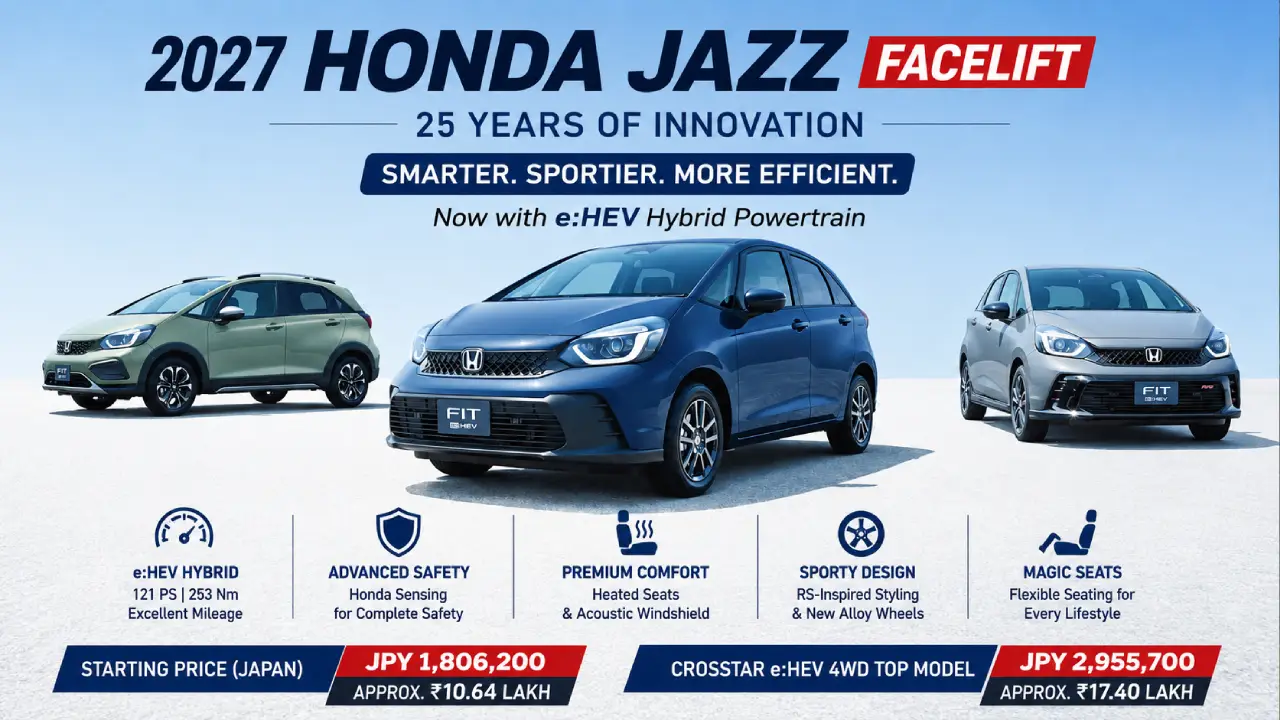
    The 2027 Honda Jazz Facelift brings a fresh design, improved premium features and an efficient e:HEV hybrid powertrain. Here’s everything about the updated hatchback, including its price, specifications and latest changes.

    2027 Honda Jazz Facelift Marks 25 Years Of The Popular Hatchback

    Honda has officially introduced the 2027 Honda Jazz Facelift in Japan, celebrating 25 years of one of its most successful global hatchbacks. Known as the Honda Fit in several international markets, the Jazz continues to remain a practical and fuel-efficient choice for urban buyers. Although Honda discontinued the Jazz in India a few years ago, the model still enjoys strong demand in countries like Japan.

    The latest facelift focuses on refreshing the exterior styling while also enhancing comfort and technology. Instead of introducing a completely new generation, Honda has refined the existing fourth-generation Jazz to keep it competitive in the premium hatchback segment.

    Moreover, the company has also reorganized the variant lineup by offering several premium features on higher trims while strengthening its hybrid portfolio.

    2027 Honda Jazz Facelift Exterior Design Gets A Sportier Look

    One of the biggest highlights of the facelift is its updated styling. Honda has given the mid-spec Z variant a much sportier appearance by borrowing several design elements from the flagship RS model.

    The refreshed front bumper now looks sharper and more aggressive. Likewise, the rear bumper also adopts the RS-inspired sporty treatment finished in elegant matte black. These subtle changes make the Jazz appear more premium without changing its practical identity.

    Interestingly, Honda has kept the base X variant almost unchanged. Buyers choosing the entry-level model will continue to get the same exterior styling available earlier.

    Meanwhile, alloy wheel design remains identical on the Z trim. Honda has retained the existing 15-inch wheels instead of using the larger RS alloys. The company has also avoided fitting the sport suspension available on the RS variant.

    Honda Jazz RS Continues To Offer Exclusive Styling

    While the Z variant receives several cosmetic improvements, the RS trim still remains the sportiest version in the lineup.

    The RS continues with:

    RS Exclusive Features Details
    Front Spoiler Sporty RS-specific design
    Rear Spoiler Larger aerodynamic spoiler
    Side Skirts Exclusive sporty body kit
    Suspension Lowered sports suspension
    Alloy Wheels 16-inch sporty alloy wheels
    Exhaust Larger tailpipe design

    Furthermore, Honda has made only minor visual refinements to the RS variant. The updated alloy wheel finish gives it a fresher appearance while retaining its aggressive character.

    As a result, buyers looking for a sporty hatchback experience will still find the RS trim the most attractive option in the lineup.

    Cabin Receives Premium Comfort Upgrades

    Honda has also improved the interior experience of the Jazz facelift. The Z variant now offers several premium features that were previously limited to higher trims.

    Among the major additions are a new three-spoke leather steering wheel, heated front seats and an acoustic windshield that helps reduce outside noise inside the cabin.

    These upgrades significantly improve long-distance comfort. Therefore, daily commuting as well as highway driving becomes quieter and more relaxing.

    The RS variant continues to differentiate itself through its sporty cabin theme. It receives black roof lining, suede and leather upholstery, red contrast stitching and several RS-exclusive design elements that enhance its premium appeal.

    Honda Jazz e:HEV Hybrid Powertrain Offers Better Efficiency

    The biggest mechanical highlight of the 2027 Honda Jazz Facelift is its advanced e:HEV hybrid system. Honda continues to focus on fuel efficiency without compromising everyday performance. As a result, buyers can enjoy smooth acceleration, lower fuel consumption and reduced emissions in daily driving.

    The e:HEV setup combines a petrol engine with two electric motors to deliver a balanced driving experience. Together, the hybrid system produces 121 bhp of maximum power and 253 Nm of combined torque. Moreover, the intelligent hybrid technology can drive the car on electric power alone in certain situations, helping improve fuel economy in city traffic.

    Unlike conventional mild-hybrid systems, Honda’s e:HEV technology automatically switches between EV Drive, Hybrid Drive and Engine Drive depending on road conditions. Therefore, drivers do not need to manually change driving modes.

    Honda Jazz Crosstar Continues With SUV-Inspired Styling

    Alongside the standard Jazz, Honda has also updated the rugged-looking Jazz Crosstar. This variant is designed for buyers who prefer a crossover-inspired hatchback with a tougher appearance.

    The Crosstar features additional body cladding, roof rails, unique bumpers and a higher driving position that gives it a more adventurous personality. Furthermore, buyers in Japan can even opt for Honda’s 4WD (Four-Wheel Drive) system, making it more capable on slippery roads and during winter conditions.

    Just like the sporty RS variant, the Crosstar is now offered exclusively with the e:HEV hybrid powertrain. Honda believes customers choosing premium variants are more interested in better fuel efficiency and refined performance.

    Interior Technology And Comfort Features

    The cabin of the 2027 Honda Jazz continues to focus on practicality while receiving several premium upgrades. Honda has retained its famous flexible seating layout, making the hatchback one of the most versatile cars in its class.

    Depending on the variant, buyers can enjoy features such as:

    Feature Availability
    Leather Steering Wheel Z & RS Variants
    Heated Front Seats Z, RS & Crosstar
    Acoustic Front Windshield Higher Variants
    Magic Seats All Variants
    Automatic Climate Control Select Variants
    Honda Sensing Safety Suite Available

    Meanwhile, Honda’s Magic Seat configuration remains one of the Jazz’s biggest strengths. The rear seats can fold in multiple ways, allowing owners to carry large luggage, bicycles, plants or other bulky items without difficulty.

    2027 Honda Jazz Facelift Specifications

    Specification Details
    Engine 1.5-litre Petrol + e:HEV Hybrid
    Maximum Power 121 bhp (Combined)
    Maximum Torque 253 Nm
    Transmission e-CVT Automatic
    Drive Options FWD / Optional 4WD
    Wheel Size 15-inch / 16-inch (RS)
    Fuel Type Petrol Hybrid
    Safety Honda Sensing ADAS

    2027 Honda Jazz Price In Japan

    Honda has priced the updated Jazz competitively in Japan. The entry-level variant starts at JPY 1,806,200, which converts to approximately Rs 10.64 lakh. Meanwhile, the fully-loaded Crosstar e:HEV with optional four-wheel drive costs around JPY 2,955,700, or roughly Rs 17.40 lakh.

    The pricing makes the Jazz one of the most practical premium hatchbacks in its home market, especially considering its hybrid technology and premium equipment.

    Will Honda Bring The Jazz Back To India?

    Unfortunately for Indian enthusiasts, Honda has no official plans to relaunch the Jazz in the Indian market. The company discontinued the hatchback after declining demand in the premium hatchback segment.

    Instead, Honda India is currently focusing on its SUV strategy with models like the Elevate. Although many customers still appreciate the Jazz for its spacious cabin, comfortable ride and dependable reliability, there has been no confirmation regarding an Indian comeback.

    However, if market demand for premium hatchbacks improves in the future, Honda could reconsider introducing a hybrid Jazz. As of now, though, the facelift remains exclusive to international markets such as Japan.

    Final Verdict

    The 2027 Honda Jazz Facelift may not be an all-new generation, but it successfully keeps Honda’s popular hatchback fresh with meaningful updates. The sportier exterior styling, improved interior quality and efficient e:HEV hybrid technology make it an even stronger package for buyers looking for practicality and fuel economy.

    Moreover, exclusive variants like the RS and Crosstar continue to offer unique personalities, allowing buyers to choose between sporty styling or crossover-inspired versatility. Although Indian buyers won’t see the new Jazz in local showrooms anytime soon, the facelift proves that Honda still believes in the hatchback’s global appeal.

    Frequently Asked Questions (FAQs)

    Q1. What is the starting price of the 2027 Honda Jazz Facelift?
    The updated Honda Jazz starts at JPY 1,806,200, which is approximately Rs 10.64 lakh.

    Q2. Does the new Honda Jazz come with a hybrid engine?
    Yes. Honda offers the advanced e:HEV hybrid powertrain with a combined output of 121 bhp and 253 Nm.

    Q3. Is Honda planning to relaunch the Jazz in India?
    No. Honda has not announced any plans to bring the Jazz back to the Indian market.

  • Best Budget Scooters Under ₹80,000 in 2026: Save Petrol and Enjoy Hassle-Free Daily Rides

    Best Budget Scooters Under ₹80,000 in 2026: Save Petrol and Enjoy Hassle-Free Daily Rides

    Looking for a fuel-efficient and affordable scooter in 2026? If yes, this is the perfect time to buy one. Several budget-friendly scooters now offer excellent mileage, low maintenance costs, and reliable performance for daily commuting. With fuel prices continuing to remain high, choosing the right scooter can help you save money every month while making your daily rides more comfortable.

    Why Buying a Scooter Right Now Makes Sense

    If you have been planning to purchase a new scooter, delaying your decision may not be the best idea. Industry experts believe that two-wheeler prices could increase in the coming months due to rising production costs and changing market conditions. Booking your scooter today could help you secure the current price while also taking advantage of attractive dealership offers available this month.

    Moreover, many dealerships are currently offering exchange bonuses, finance schemes, low down payment options, and cashback benefits, making July one of the best times to buy a new scooter.

    Honda Dio: A Stylish and Reliable Choice

    The Honda Dio continues to be one of India’s most popular scooters in the budget segment. Known for its sporty design, refined engine, and dependable build quality, the Dio is an excellent option for students, office commuters, and young riders.

    The scooter delivers smooth performance in city traffic while maintaining impressive fuel efficiency. Honda’s trusted engine technology also ensures lower maintenance costs over the long term, making ownership affordable.

    Feature Honda Dio
    Engine 109.51cc
    Mileage Up to 50-55 km/l (Approx.)
    Starting System Electric & Kick Start
    Best For City Commuting & Daily Use

    Hero Xoom: Feature-Packed Budget Scooter

    Hero Xoom has quickly gained popularity among buyers looking for a modern scooter with stylish looks and practical features. It offers sharp styling, LED lighting, digital instrumentation, and a comfortable riding experience at an affordable price.

    Additionally, Hero’s widespread service network makes maintenance easy across India. The scooter also provides competitive mileage, making it suitable for riders who travel daily.

    Feature Hero Xoom
    Engine 110.9cc
    Mileage Approximately 50-53 km/l
    Display Digital Instrument Console
    Ideal For Urban & Daily Commuting

    Perfect Scooters for the Monsoon Season

    The rainy season demands a scooter that offers predictable handling, reliable braking, and stable road grip. Both the Honda Dio and Hero Xoom perform well in wet road conditions when ridden carefully and maintained properly.

    Their lightweight design makes them easy to control in heavy traffic, while their refined engines deliver consistent performance even during daily monsoon commutes.

    Low Running Cost Means Bigger Savings

    One of the biggest advantages of owning a budget scooter is its economical running cost. Compared to motorcycles and cars, scooters consume less fuel and usually require lower maintenance expenses. Over a year, this can translate into significant savings for regular commuters.

    Routine servicing, affordable spare parts, and strong resale value further improve the ownership experience.

    Should You Buy Now?

    If you are planning to purchase a new scooter in the near future, booking one today could be a smart financial decision. Prices may increase later due to higher manufacturing costs, while current dealership offers may not remain available for long.

    For riders looking for dependable performance during the rainy season, the Honda Dio and Hero Xoom stand out as two of the strongest options in the budget segment. Both scooters offer an excellent balance of fuel efficiency, practicality, safety, and affordability.

    Visit your nearest authorized dealership today, compare both models, take a test ride, and choose the scooter that best matches your daily commuting needs.

    Frequently Asked Questions (FAQs)

    Q1. Which scooter offers better mileage, Honda Dio or Hero Xoom?
    Both scooters offer fuel efficiency of around 50–55 km/l, depending on riding conditions and maintenance.

    Q2. Is this the right time to buy a new scooter?
    Yes. Buying now may help you avoid possible future price hikes and allow you to benefit from current dealer offers and finance schemes.

    Q3. Which scooter is better for monsoon riding?
    Both the Honda Dio and Hero Xoom provide reliable performance, comfortable handling, and good practicality for everyday riding during the rainy season.

  • Watch 1932 Studebaker Crash Test: The Incredible Safety Experiments That Changed Automotive History

    Watch 1932 Studebaker Crash Test: The Incredible Safety Experiments That Changed Automotive History

    Long before modern crash laboratories, airbags, and computer simulations became standard, automakers relied on bold real-world experiments to improve vehicle durability. A remarkable 1932 Studebaker safety film reveals just how far engineers were willing to go, making it one of the most fascinating chapters in automotive history.

    Studebaker’s 1932 Safety Tests Were Unlike Anything We See Today

    Modern crash testing is carefully controlled inside advanced laboratories using sophisticated sensors, high-speed cameras, and crash-test dummies. However, things looked very different almost a century ago.

    Back in 1932, Studebaker engineers relied on practical demonstrations instead of computerized simulations. One of the most remarkable examples comes from a historical film titled Studebaker Safety, produced by the Chicago Daily News. The video showcases several dramatic experiments that tested the durability of the company’s vehicles under real-world conditions.

    Even today, these tests remain surprisingly entertaining while also highlighting how automotive safety engineering evolved over time.

    Rolling a Brand-New Car Down a Steep Hill

    The film begins with what appears to be a factory-fresh Studebaker Six, also known as the Model 55. Instead of gently driving it around a test track, engineers positioned the sedan on its side using wooden supports and ropes before sending it tumbling hundreds of feet down a steep hillside.

    The objective wasn’t simply to destroy the vehicle. Instead, engineers wanted to observe how the chassis, suspension, body structure, and mechanical components reacted after experiencing repeated impacts.

    Although the method seems crude by today’s standards, it demonstrated the company’s commitment to understanding vehicle strength through practical testing.

    Vehicle Durability Was Tested in Multiple Ways

    The hillside experiment represented only one part of Studebaker’s extensive testing program.

    Engineers also pushed the car across rough suspension courses designed to simulate extremely damaged roads. Slow-motion footage revealed all four wheels leaving the ground during certain sections, providing valuable insight into suspension movement and structural flexibility.

    Moreover, another remarkable experiment intentionally burst the tires while the vehicle travelled at nearly 60 mph. Engineers carefully observed how the sedan behaved after suddenly losing tire pressure, helping them evaluate steering stability and driver control during emergencies.

    Test Purpose
    Hill Roll Test Measure body strength and structural durability
    Suspension Course Evaluate suspension and chassis performance
    Tire Blowout Test Check stability after sudden tire failure
    Head-on Collision Study crash damage and passenger safety

    The Dramatic Head-On Crash Was the Film’s Biggest Highlight

    The most memorable sequence arrives near the end of the film, where Studebaker engineers stage a full-speed head-on collision. Two identical Studebaker Six sedans accelerate toward each other before crashing at approximately 55 mph. Before impact, the engineers carefully exit both vehicles, allowing the cars to continue on their own. Even by today’s standards, the footage remains fascinating because it captures one of the earliest documented automotive crash demonstrations.

    Surprisingly, the damage isn’t as catastrophic as many viewers might expect. While the front ends suffer extensive destruction, the vehicles display impressive structural integrity for their era. Earlier tests show that the Studebaker Six often continued driving after severe punishment, proving the strength of its engineering. Only the final collision leaves the cars completely disabled.

    How Vehicle Testing Has Changed Since 1932

    Automotive safety has evolved dramatically over the last nine decades. Today’s manufacturers rely on computer simulations, crash-test dummies packed with sensors, robotic driving systems, and high-speed cameras capable of recording thousands of frames per second. Every impact generates detailed information that helps engineers improve passenger protection.

    However, the Studebaker film reminds us that modern testing methods were built upon decades of experimentation. Manufacturers during the early twentieth century often depended on practical demonstrations because sophisticated laboratory equipment simply did not exist. Although those techniques now appear risky, they represented cutting-edge engineering at the time.

    The Indiana Proving Grounds Played an Important Role

    The famous proving grounds featured in the film were located in Indiana, close to Studebaker’s manufacturing operations. For many years, these roads served as the company’s primary testing facility, where engineers evaluated durability, suspension performance, braking, and overall vehicle reliability before production models reached customers.

    Following Studebaker’s closure in 1966, the proving grounds gradually changed purpose. Today, much of the area has become public parkland. One of the most recognizable landmarks is the group of nearly 8,000 pine trees planted to spell the word “Studebaker”, a feature that remains visible from the air and continues to attract automobile enthusiasts and historians.

    Why This Vintage Film Still Fascinates Car Enthusiasts

    Classic automotive videos often capture more than just old cars—they preserve an era of engineering that relied on creativity, courage, and practical experimentation. The Studebaker Safety film offers a rare glimpse into how engineers approached vehicle development long before regulations standardized crash testing.

    Moreover, the footage highlights the remarkable durability of automobiles built during the early 1930s. Despite repeated abuse, including hill rolls, suspension punishment, tire blowouts, and heavy impacts, the Studebaker Six frequently remained operational. That resilience continues to impress viewers nearly a century later.

    Studebaker’s Legacy Lives On

    Although Studebaker no longer manufactures automobiles, its contribution to automotive engineering remains significant. The company’s willingness to experiment with real-world testing helped establish important ideas about durability and safety. While modern manufacturers use advanced technology instead of rolling cars down hills, the underlying goal remains exactly the same—building stronger, safer, and more dependable vehicles.

    For automotive historians, collectors, and classic car fans, the 1932 safety film represents more than simple entertainment. It serves as a valuable historical document that showcases the determination of early engineers who continually searched for better ways to improve automobiles.

    Feature Details
    Vehicle Tested Studebaker Six (Model 55)
    Year 1932
    Testing Location Studebaker Proving Grounds, Indiana
    Main Tests Hill Roll, Suspension Course, Tire Blowout, Brake Test, Head-On Collision
    Historical Importance One of America’s earliest recorded vehicle safety demonstrations

    Frequently Asked Questions (FAQs)

    Q1. What was the purpose of Studebaker’s 1932 vehicle testing?
    The tests evaluated the durability, suspension strength, braking performance, and crash resistance of the Studebaker Six under extreme real-world conditions.

    Q2. Did the Studebaker Six survive these extreme tests?
    Yes. During several demonstrations, including hill rolls and rough-road testing, the car remained functional. Only the final head-on collision caused complete damage.

    Q3. Can visitors still see the original Studebaker proving grounds?
    The original proving grounds are no longer active. However, parts of the site have become public parkland, and the famous “Studebaker” pine tree formation can still be seen from above.

    Watch 1932 Studebaker Crash Test: The Incredible Safety Experiments That Changed Automotive History

    Discover the fascinating 1932 Studebaker crash tests where engineers rolled cars down hills, performed tire blowouts, and staged dramatic head-on collisions to improve vehicle safety decades before modern crash labs.


  • Fuel Prices Keep Rising? These 2026 best mileage cars and Lowest Running Costs

    Fuel Prices Keep Rising? These 2026 best mileage cars and Lowest Running Costs

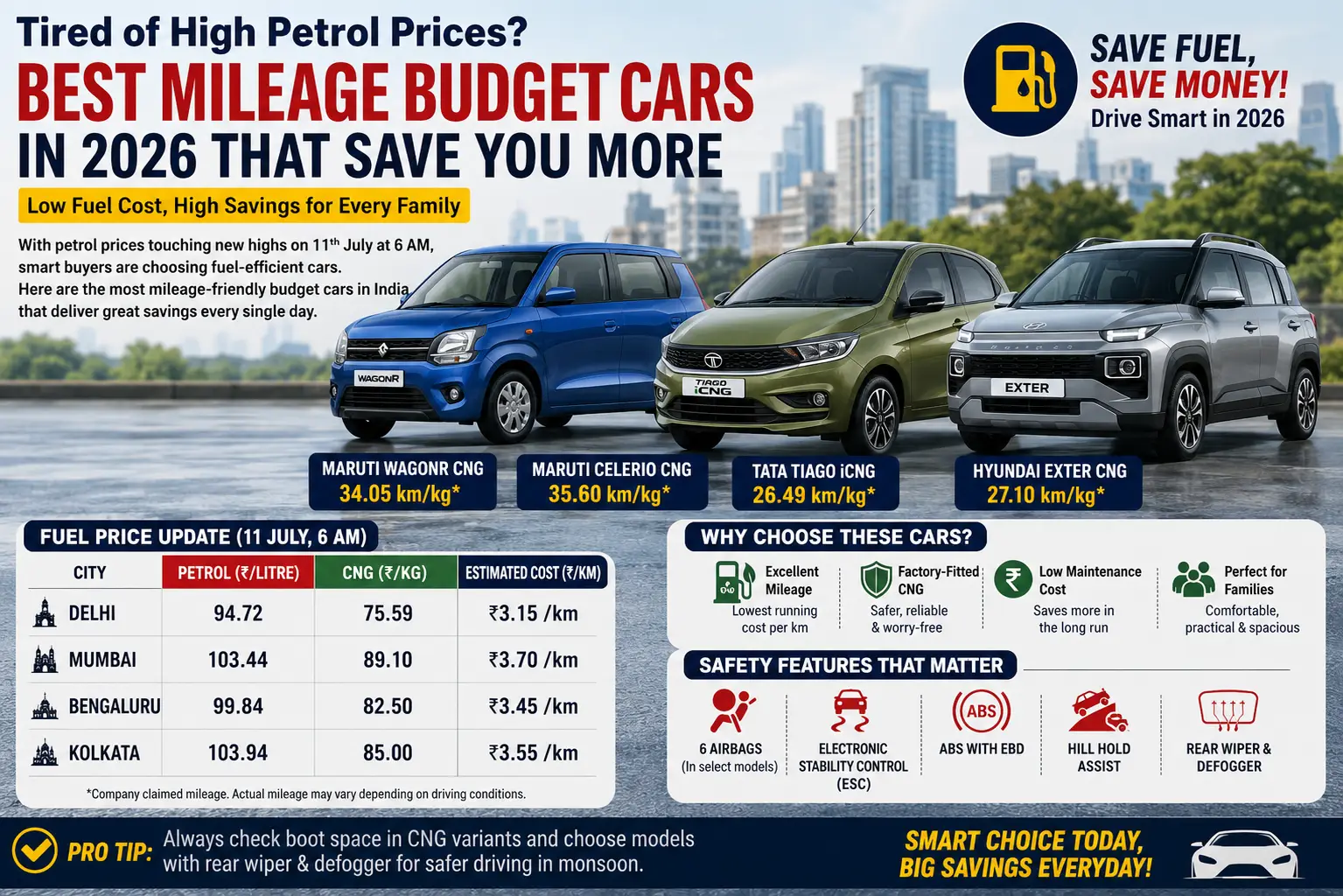
    Rising fuel prices continue to put pressure on household budgets across India. If you are planning to buy an affordable family car, choosing a fuel-efficient model can significantly reduce your monthly fuel expenses. Here are some of the best mileage cars that offer excellent value, low running costs, and practical features.

    Why Fuel Efficiency Matters More Than Ever

    With the latest petrol price update, many car buyers are once again focusing on vehicles that offer better fuel economy. While fuel prices vary across cities, the overall running cost of a car has become one of the biggest deciding factors for Indian families.

    Moreover, manufacturers are now offering factory-fitted CNG variants with improved safety and reliability. These models not only deliver impressive mileage but also help owners save thousands of rupees every year compared to regular petrol vehicles.

    If your daily commute includes city traffic, choosing a high-mileage hatchback or compact car can make a noticeable difference to your monthly budget.

    Best Mileage Cars Under ₹10 Lakh in India

    Several affordable cars continue to dominate the Indian market because of their excellent fuel efficiency, affordable maintenance, and dependable performance.

    Car Model Fuel Type Expected Mileage Suitable For
    Maruti Suzuki Celerio Petrol / CNG Up to 34+ km/kg (CNG) City commuters
    Maruti WagonR Petrol / CNG Up to 34 km/kg Small families
    Maruti Alto K10 Petrol / CNG Up to 33 km/kg First-time buyers
    Tata Tiago iCNG CNG Around 28 km/kg Safety-focused buyers
    Hyundai Grand i10 Nios Petrol / CNG Around 27 km/kg Premium hatchback buyers

    Maruti Suzuki Continues to Lead the Mileage Segment

    Maruti Suzuki remains one of the strongest players in India’s budget car market. Models like the Celerio, WagonR, and Alto K10 have earned a reputation for delivering outstanding mileage with low maintenance costs.

    Furthermore, factory-fitted CNG variants provide additional peace of mind because they are developed and tested by the manufacturer. Buyers also benefit from an extensive service network and strong resale value across the country.

    For families looking for a practical city car, these models continue to be among the safest financial choices.

    Tata and Hyundai Offer Better Safety Features

    While Maruti dominates the mileage race, Tata Motors and Hyundai have strengthened their position by offering more advanced safety equipment.

    The Tata Tiago iCNG comes equipped with features like multiple airbags, Electronic Stability Control (ESC) on selected variants, and a robust body structure. Likewise, the Hyundai Grand i10 Nios and Exter offer premium interiors, modern infotainment systems, and improved passenger comfort.

    Therefore, buyers who value both fuel savings and safety may find these models worth considering despite their slightly lower mileage figures.

    Running Cost Comparison

    Current fuel prices make CNG vehicles one of the most economical choices for daily commuting. In many cities, CNG-powered hatchbacks can cost nearly half as much to run compared to petrol-only vehicles.

    As a result, drivers covering 1,000 to 1,500 kilometres every month may recover the additional price of a CNG variant within a few years through fuel savings alone.

    Things to Check Before Buying

    Before making your final decision, compare the real-world mileage instead of relying only on certified figures. Also inspect boot space in CNG variants, as the cylinder reduces luggage capacity.

    Meanwhile, if you frequently drive during the monsoon, make sure the vehicle includes essential features like a rear wiper, rear defogger, ABS, airbags, and Electronic Stability Control wherever available.

    Additionally, buyers should check dealer discounts, exchange bonuses, finance offers, and immediate delivery options available during the current month.

    Final Verdict

    Fuel prices may continue to fluctuate, but selecting a high-mileage car remains one of the smartest long-term financial decisions. Whether you choose the Maruti Suzuki Celerio, WagonR, Alto K10, Tata Tiago iCNG, or Hyundai Grand i10 Nios, each offers an excellent balance of affordability, efficiency, and everyday practicality.

    Ultimately, the best choice depends on your monthly driving distance, family size, and preferred fuel type. However, if reducing running costs is your priority, factory-fitted CNG cars continue to deliver the best overall value in today’s market.

    Frequently Asked Questions (FAQs)

    Q1. Which is the highest mileage car under ₹10 lakh in India?
    Maruti Suzuki Celerio CNG is among the highest mileage cars, offering over 34 km/kg under standard testing conditions.

    Q2. Are factory-fitted CNG cars safe?
    Yes. Factory-fitted CNG vehicles are tested by manufacturers and include integrated safety systems designed specifically for CNG operation.

    Q3. Which budget car offers the best balance between mileage and safety?
    The Tata Tiago iCNG is widely considered a strong option for buyers seeking fuel efficiency along with modern safety features.-


  • Royal Enfield Bullet 650 Launched at ₹3.65 Lakh-Most Affordable Twin-Cylinder Bullet Gets 648cc Engine

    Royal Enfield Bullet 650 Launched at ₹3.65 Lakh-Most Affordable Twin-Cylinder Bullet Gets 648cc Engine

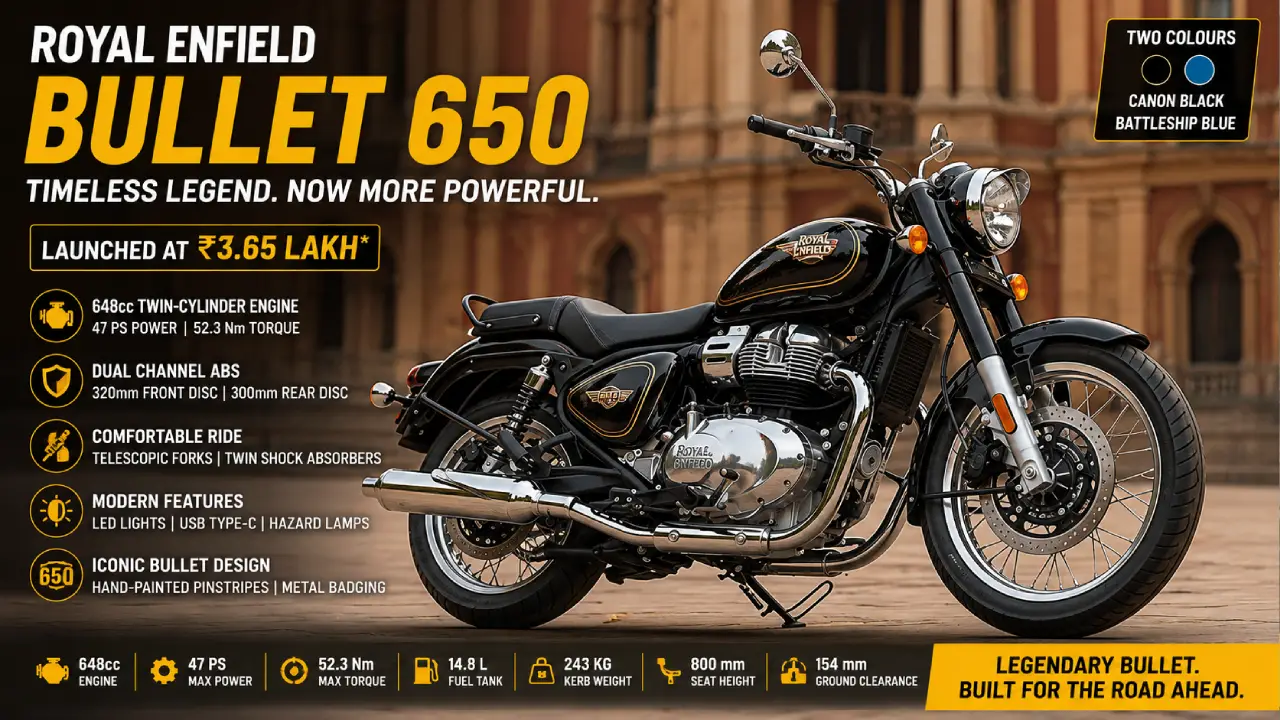
    Royal Enfield has finally introduced the much-awaited Bullet 650 in India at a starting price of ₹3.65 lakh (ex-showroom). The iconic Bullet name now enters the brand’s 650cc lineup, offering classic styling, a proven parallel-twin engine and premium features at the most affordable price on Royal Enfield’s long-wheelbase 650 platform.

    After making its global debut at EICMA last year, the Royal Enfield Bullet 650 has officially reached Indian dealerships. The motorcycle is positioned below the Classic 650 Twin, making it the most affordable model based on Royal Enfield’s long-wheelbase 650 architecture. This platform already underpins popular motorcycles like the Super Meteor 650, Shotgun 650 and Classic 650 Twin. With its traditional design, modern engineering and attractive pricing, the new Bullet 650 is expected to appeal to both loyal Bullet enthusiasts and riders looking to upgrade to a twin-cylinder motorcycle.

    Royal Enfield Bullet 650 Design Stays True to the Legendary Bullet Heritage

    Although the new Bullet 650 shares its mechanical foundation with the Classic 650 Twin, Royal Enfield has carefully preserved the timeless Bullet identity. The motorcycle features hand-painted pinstripes, premium metal tank badges and a distinctive squared rear mudguard that instantly reminds riders of the legendary Bullet series.

    Moreover, the company has equipped the bike with a comfortable single-piece stepped seat that improves pillion comfort during long-distance touring. The signature chrome headlamp nacelle and classic tail lamp design further strengthen its retro appeal. Unlike motorcycles that focus heavily on modern styling, the Bullet 650 stays faithful to its heritage while quietly integrating contemporary technology.

    Powerful 648cc Parallel-Twin Engine Delivers Smooth Performance

    The biggest highlight of the new Bullet 650 is its trusted 648cc inline twin-cylinder, four-stroke SOHC engine. This motor has already earned an excellent reputation for refinement, reliability and effortless highway cruising across Royal Enfield’s 650 range.

    The engine produces 47 PS (34.6 kW) at 7,250 rpm and develops 52.3 Nm of peak torque at 5,650 rpm. Power is delivered through a smooth six-speed constant mesh gearbox paired with a wet multi-plate clutch. Furthermore, electronic fuel injection ensures crisp throttle response while maintaining fuel efficiency and smooth power delivery.

    The result is a motorcycle that feels equally comfortable during city commuting and long highway rides.

    Comfortable Chassis and Confident Ride Quality

    Royal Enfield has built the Bullet 650 around a steel tubular spine frame that offers excellent stability without compromising rider comfort. Suspension duties are handled by 43mm telescopic front forks and twin rear shock absorbers.

    The front suspension offers 120mm of wheel travel, while the rear provides 90mm, making the motorcycle capable of handling uneven roads comfortably. Whether riding through city traffic or covering long touring routes, the suspension setup promises a balanced riding experience.

    Braking performance comes from a 320mm front disc and a 300mm rear disc, supported by dual-channel ABS for improved safety under hard braking conditions.

    Royal Enfield Bullet 650 Dimensions and Specifications

    Feature Details
    Engine 648cc Parallel Twin, SOHC
    Maximum Power 47 PS @ 7,250 rpm
    Peak Torque 52.3 Nm @ 5,650 rpm
    Transmission 6-Speed Gearbox
    Frame Steel Tubular Spine Frame
    Front Suspension 43mm Telescopic Forks
    Rear Suspension Twin Shock Absorbers
    Front Brake 320mm Disc
    Rear Brake 300mm Disc
    ABS Dual Channel
    Seat Height 800 mm
    Ground Clearance 154 mm
    Wheelbase 1,480 mm
    Fuel Tank 14.8 Litres
    Kerb Weight 243 kg

    Modern Features Without Losing Its Retro Character

    Despite its classic appearance, the Bullet 650 receives several useful modern features. It comes equipped with full LED lighting, hazard lamps, a USB Type-C charging port and premium nickel-plated aluminium switchgear. These additions improve everyday usability while preserving the timeless Bullet design language.

    The motorcycle is available in two attractive colour options—Canon Black and Battleship Blue—both of which complement its traditional styling perfectly.

    Price, Rivals and Market Position

    Priced at ₹3.65 lakh (ex-showroom), the Bullet 650 becomes the most affordable motorcycle built on Royal Enfield’s long-wheelbase 650 platform. This aggressive pricing makes it an attractive option for riders seeking a premium twin-cylinder motorcycle without stretching their budget.

    In the Indian middleweight motorcycle segment, the Bullet 650 competes with the BSA Gold Star 650. At the same time, it also offers an alternative to Royal Enfield’s own Classic 650 Twin by combining simpler styling with a lower asking price.

    Final Verdict

    The Royal Enfield Bullet 650 successfully blends timeless styling with modern engineering. Its refined 648cc parallel-twin engine, premium build quality, comfortable ergonomics and competitive pricing make it one of the strongest new launches in the middleweight retro motorcycle segment. Riders looking for a motorcycle that carries the legendary Bullet legacy while offering smooth twin-cylinder performance will find plenty to like here. With its accessible pricing and proven mechanical package, the Bullet 650 is expected to become another strong seller in Royal Enfield’s growing 650cc portfolio.

    FAQs

    Q1. What is the price of the Royal Enfield Bullet 650?
    The Royal Enfield Bullet 650 has been launched in India at a starting price of ₹3.65 lakh (ex-showroom).

    Q2. Which engine powers the Bullet 650?
    It is powered by a 648cc parallel-twin SOHC engine producing 47 PS of power and 52.3 Nm of torque.

    Q3. Which motorcycles compete with the Bullet 650?
    The Bullet 650 competes with the BSA Gold Star 650 and also serves as a more affordable alternative to the Royal Enfield Classic 650 Twin.

  • Petrol Prices Rising? These 5 Budget Mileage Bikes Can Save You Money Every Day

    Petrol Prices Rising? These 5 Budget Mileage Bikes Can Save You Money Every Day

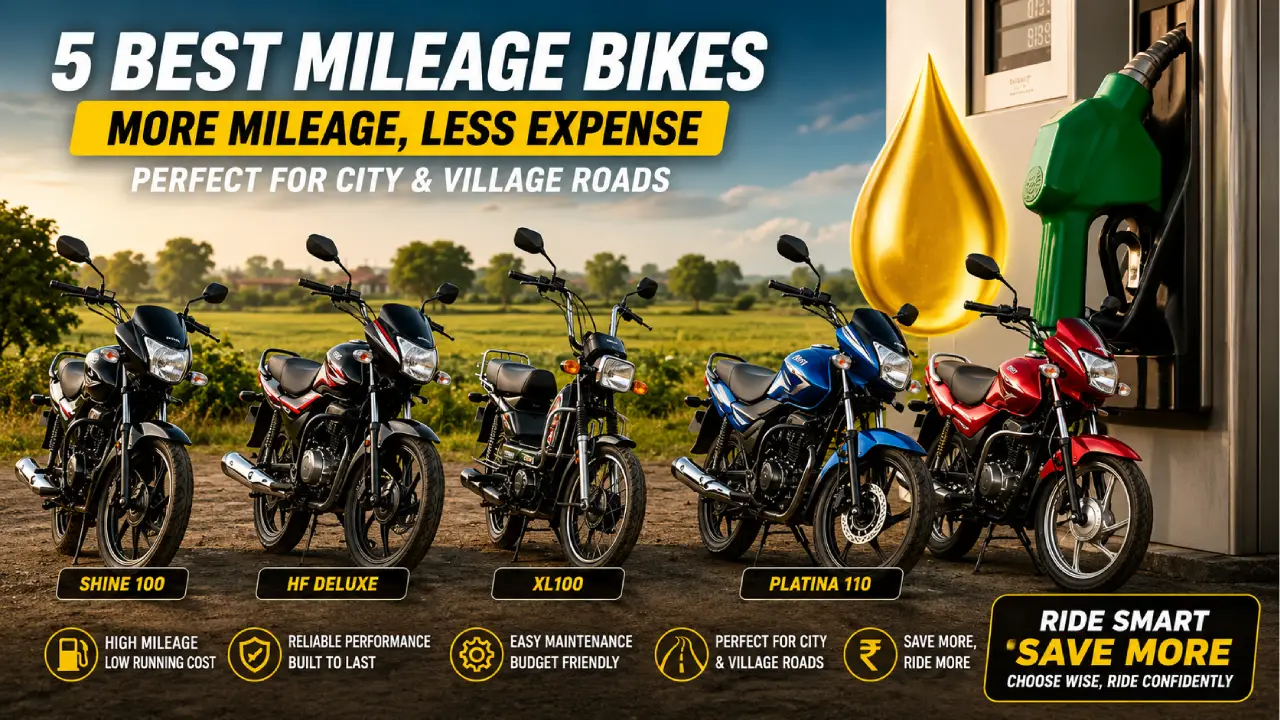
    Introduction: Rising petrol prices are increasing the cost of daily commuting across India. If you want an affordable and fuel-efficient motorcycle, these budget mileage bikes offer low running costs, reliable performance and practical features for both city and village roads.

    Petrol prices continue to impact the monthly budget of millions of commuters, especially those living in rural areas where two-wheelers are the primary mode of transportation. With the latest fuel price update, buyers are once again focusing on motorcycles that deliver excellent mileage without increasing maintenance expenses. Fortunately, several commuter bikes in India combine fuel efficiency, affordability and durability, making them ideal for everyday travel.

    Honda Shine 100 and Hero HF Deluxe Remain Reliable Choices

    The Honda Shine 100 and Hero HF Deluxe continue to be among the most trusted commuter motorcycles in the country. Both bikes are designed for regular use and perform well on rough village roads as well as city streets. Their full chain cover protects the engine and chain from dust, mud and rainwater, making them suitable for monsoon riding conditions.

    Moreover, these motorcycles are known for their simple maintenance and dependable engines, helping owners keep long-term running costs under control.

    TVS XL100 and Bajaj Platina 110 Offer Practical Benefits

    For riders who regularly carry goods or travel on uneven roads, the TVS XL100 Heavy Duty remains a practical option. Its sturdy metal carrier is useful for transporting luggage, agricultural products and daily essentials. Meanwhile, the Bajaj Platina 110 H-Gear offers smooth gear shifting and a comfortable suspension setup, making longer rides less tiring.

    These motorcycles are built with practicality in mind rather than flashy styling, which explains their continued popularity among rural buyers.

    Estimated On-Road Prices in Major Cities

    City Recommended Model Estimated On-Road Price
    Patna Honda Shine 100 ₹81,200
    Ranchi Hero HF Deluxe ₹78,500
    Guwahati TVS XL100 Heavy Duty ₹64,300
    Nagpur Bajaj Platina 110 H-Gear ₹89,400

    Choose the Right Bike for the Monsoon Season

    During the rainy season, safety becomes just as important as mileage. Buyers should consider motorcycles equipped with tubeless tyres because they reduce the chances of getting stranded after a puncture. Riders should also ensure that the headlamp provides proper visibility for travelling on dark village roads.

    In flood-prone areas, avoid riding through water that rises above the wheel hub. If the engine stalls in deep water, do not attempt to restart it immediately, as this may cause serious engine damage. Checking whether your insurance policy includes an engine protection add-on can also provide extra peace of mind during the monsoon.

    Final Verdict

    If your priority is saving money on fuel while enjoying reliable everyday transportation, the Honda Shine 100, Hero HF Deluxe, TVS XL100 Heavy Duty and Bajaj Platina 110 H-Gear remain some of the best budget motorcycles currently available. They offer dependable mileage, affordable maintenance and practical features that suit both village and city commuters. Before purchasing, compare dealer offers, inspect tyre condition and choose a model that matches your daily riding requirements.

  • Delhi-NCR Rain Alert: Best Used Hatchback Cars Under ₹4 Lakh for Safe Monsoon Driving

    Delhi-NCR Rain Alert: Best Used Hatchback Cars Under ₹4 Lakh for Safe Monsoon Driving

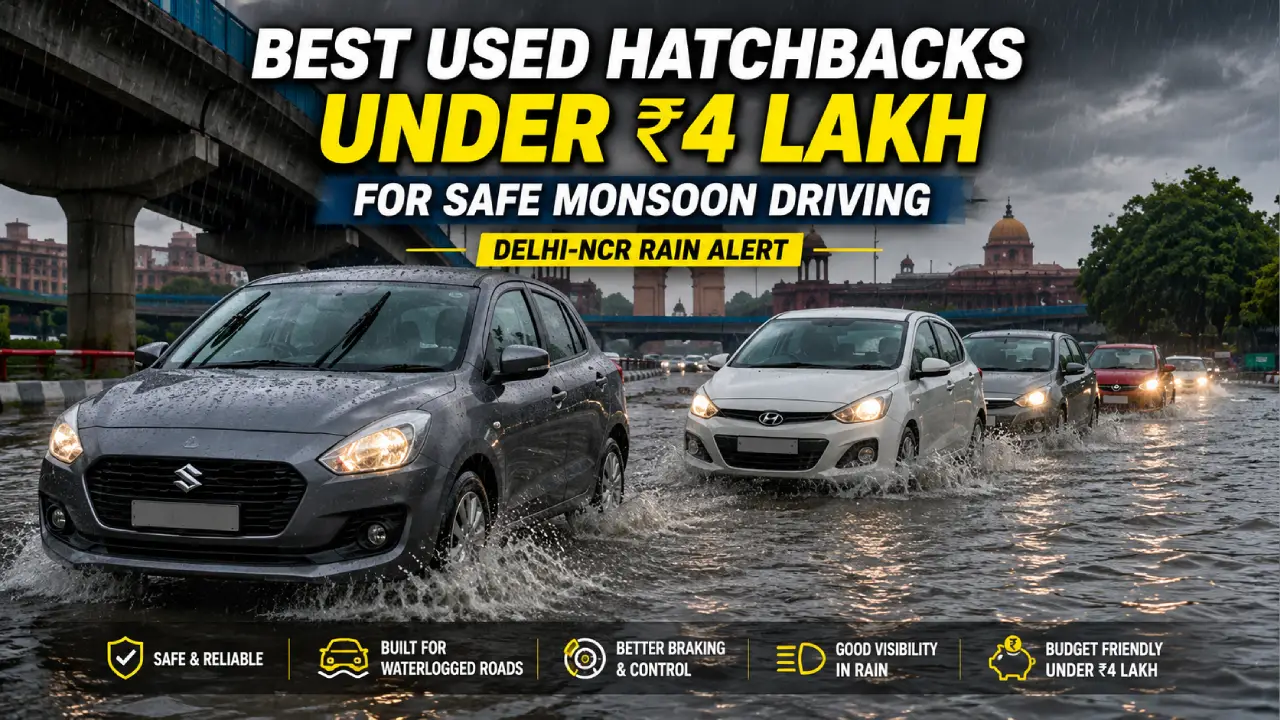
    Introduction: Heavy rainfall across Delhi-NCR has increased the risk of waterlogging and slippery roads. If you’re looking for a reliable used hatchback under ₹4 lakh, here are some of the safest options for monsoon driving.

    The India Meteorological Department (IMD) has issued a red alert for Delhi-NCR following heavy rainfall across Delhi, Noida and Gurugram. Waterlogged roads and poor visibility have made daily commuting more challenging, prompting many buyers to search for dependable used hatchback cars within a budget of ₹4 lakh.

    During the monsoon season, a well-maintained hatchback with strong braking, good visibility and reliable road manners can make a significant difference. Fortunately, several used models in this budget still offer essential safety features like ABS, dual airbags and rear wipers, making them practical choices for everyday driving.

    Tata Tiago XT Offers Strong Build Quality for Rainy Roads

    The 2017–2019 Tata Tiago XT remains one of the most recommended used hatchbacks in this price range. Its solid build quality, balanced handling and dependable braking make it suitable for driving on wet roads.

    Many examples available in the used-car market come equipped with Anti-lock Braking System (ABS) and dual front airbags. These features help improve safety during emergency braking on slippery roads. Moreover, the Tiago remains stable even during heavy rain and strong crosswinds, giving drivers added confidence.

    Hyundai Grand i10 Sportz Is Practical for Daily City Commutes

    The Hyundai Grand i10 Sportz, particularly 2016–2019 models, continues to be a popular choice among used car buyers. It offers a comfortable cabin, smooth petrol engine and useful convenience features for monsoon driving.

    One of its biggest advantages is the rear wiper and rear defogger, which help maintain better visibility during heavy rain. Combined with easy city handling and affordable maintenance, the Grand i10 remains an excellent option for families and office commuters.

    Toyota Etios Liva Is Known for Long-Term Reliability

    If reliability is your top priority, the Toyota Etios Liva G from the 2016–2018 model years deserves serious consideration. Toyota’s dependable engine, practical ground clearance and low maintenance costs have made this hatchback a trusted choice for Indian road conditions.

    The suspension handles potholes and uneven roads comfortably, while the car’s predictable driving dynamics inspire confidence during wet weather.

    Maruti Ritz and Swift Continue to Offer Great Value

    The Maruti Ritz and Swift VXi remain among the most sought-after used hatchbacks below ₹4 lakh. Their widespread service network, affordable spare parts and low maintenance costs make ownership easy.

    When buying either model, choose a variant equipped with a rear wiper and good-quality halogen headlamps. These features improve visibility during rainfall and make highway driving safer.

    Best Used Hatchbacks Under ₹4 Lakh for Monsoon

    Car Model Year Key Monsoon Feature
    Tata Tiago XT 2017–2019 ABS, Dual Airbags, Strong Build
    Hyundai Grand i10 Sportz 2016–2019 Rear Wiper, Rear Defogger
    Toyota Etios Liva G 2016–2018 Reliable Engine, Good Ground Clearance
    Maruti Swift VXi 2015–2018 Easy Maintenance, Affordable Parts
    Maruti Ritz 2015–2018 Practical Design, Low Running Cost

    Things to Check Before Buying a Used Car in Delhi-NCR

    Before finalising any used vehicle, buyers should verify the Registration Certificate (RC) and ensure the car complies with Delhi-NCR regulations. Diesel vehicles older than 10 years and petrol vehicles older than 15 years are restricted in the region.

    It is also important to inspect the vehicle carefully for signs of previous flood damage. Ask the seller about the insurance history, inspect the engine bay for silt deposits and, if possible, have the Electronic Control Unit (ECU) scanned at an authorised workshop. These checks can help identify hidden water damage before purchase.

    Finally, inspect the condition of the tyres. Good tread depth provides better grip on wet roads and improves braking performance during the monsoon.

    Final Verdict

    For buyers looking for a dependable used hatchback under ₹4 lakh, the Tata Tiago XT, Hyundai Grand i10 Sportz, Toyota Etios Liva G, Maruti Swift and Maruti Ritz remain among the strongest choices. Each of these models offers practical features, affordable maintenance and proven reliability for everyday driving.

    However, always verify the service history, insurance records and overall condition before making a purchase. A well-maintained used hatchback can provide safe and comfortable transportation even during the challenging monsoon season.

    FAQs

    Q1. Which used hatchback is best for monsoon driving under ₹4 lakh?
    The Tata Tiago XT is one of the best options due to its strong build quality, ABS and dual airbags.

    Q2. Is the Hyundai Grand i10 a good used car for rainy weather?
    Yes. The Grand i10 Sportz offers rear wiper, rear defogger and comfortable handling, making it suitable for monsoon driving.

    Q3. What should I check before buying a used car during the monsoon?
    Always inspect the RC, service history, insurance records, tyres and check for signs of previous flood damage.

  • Best 125cc Bikes for Monsoon 2026: Top Picks for Rajasthan & MP Rural Roads, Prices & Safety Tips

    Best 125cc Bikes for Monsoon 2026: Top Picks for Rajasthan & MP Rural Roads, Prices & Safety Tips

    Introduction: Heavy monsoon showers across Rajasthan and Madhya Pradesh have made daily commuting more challenging than ever. Choosing a reliable 125cc motorcycle with strong braking, good ground clearance, and dependable performance can make every ride safer on muddy village roads and waterlogged city streets.

    Monsoon has arrived in full force across eastern Rajasthan and western Madhya Pradesh. Continuous rainfall in cities like Kota, Udaipur, Indore, Bhopal, and nearby rural regions has increased the risk of waterlogging, slippery roads, and flash floods. Under such conditions, riding an ordinary commuter bike can become risky if it lacks proper braking performance and adequate ground clearance.

    Many buyers are now moving away from basic entry-level motorcycles and choosing feature-rich 110cc and 125cc bikes that offer better stability, refined engines, front disc brakes, and improved suspension. These motorcycles not only provide better confidence on rough roads but also help riders stay in control during unexpected monsoon conditions.

    Why 125cc Bikes Are Becoming the First Choice This Monsoon

    The Indian 125cc motorcycle segment has evolved significantly over the last few years. Manufacturers have focused on improving rider safety, fuel efficiency, comfort, and everyday practicality. As a result, modern commuter bikes are now equipped with advanced braking systems, stronger chassis, wider tyres, better suspension, and refined BS6-compliant engines.

    During the rainy season, these improvements become even more valuable. Waterlogged roads, loose gravel, muddy village tracks, and broken highways require a motorcycle that remains stable without sacrificing fuel economy.

    Moreover, many 125cc motorcycles now come with front disc brake variants, combined braking systems, tubeless tyres, and better mud protection. These features significantly improve rider confidence when sudden braking becomes necessary on wet roads.

    Honda Shine 125 Disc – A Reliable Companion for Rough Rural Roads

    The Honda Shine 125 has remained one of India’s highest-selling commuter motorcycles because of its smooth engine, excellent refinement, and dependable reliability. Riders across Rajasthan and Madhya Pradesh especially appreciate its balanced suspension setup, which absorbs potholes and broken village roads quite effectively.

    The motorcycle’s 123.94cc fuel-injected engine delivers smooth power without unnecessary vibrations. Even while carrying a pillion rider through muddy roads, the Shine maintains predictable handling.

    Another advantage during monsoon riding is its well-designed mudguard, which helps reduce mud splashes and prevents excessive dirt accumulation around the wheels. This becomes particularly useful on unpaved rural roads after continuous rainfall.

    Feature Honda Shine 125 Disc
    Engine 123.94cc Single Cylinder
    Power 10.6 PS
    Torque 11 Nm
    Front Brake Disc
    Mileage 55–65 km/l (Approx.)
    Best For Daily commuting and rural roads

    Honda SP125 Offers Modern Features with Better Riding Confidence

    For buyers looking for a premium commuter motorcycle, the Honda SP125 continues to be one of the strongest contenders in the segment. It shares Honda’s trusted engine technology while offering several additional features that improve everyday usability.

    The fully digital instrument console provides fuel efficiency information, gear position indication, distance-to-empty, service reminders, and real-time mileage. These features become especially useful during long rides through remote villages where fuel stations may not always be available.

    Furthermore, Honda has tuned the suspension to offer better comfort over damaged roads. Combined with tubeless tyres and responsive braking, the SP125 inspires greater confidence on slippery surfaces.

    The motorcycle also benefits from Honda’s enhanced smart engine technology, helping improve fuel economy without compromising refinement.

    Hero Glamour XTEC – Built for Everyday Practicality

    Hero MotoCorp has strengthened its position in the commuter motorcycle segment with the Glamour XTEC. Designed primarily for Indian road conditions, the motorcycle combines fuel efficiency with practical safety features.

    Its LED headlamp improves nighttime visibility during heavy rainfall, while the digital instrument cluster displays important riding information clearly even in poor weather conditions.

    The front disc brake variant offers improved stopping power compared to traditional drum brake models. Riders travelling through muddy roads or slippery highways can benefit from better braking confidence during sudden obstacles.

    Additionally, Hero has equipped the motorcycle with a sealed chain cover that helps protect the drivetrain from mud, dust, and excessive moisture. This simple feature reduces maintenance requirements during the rainy season.

    Feature Hero Glamour XTEC
    Engine 124.7cc
    Power 10.8 PS
    Front Brake Disc
    Display Digital
    Bluetooth Yes
    Mileage 55–60 km/l (Approx.)

    TVS Raider 125 Brings Sporty Styling with Everyday Comfort

    The TVS Raider 125 has quickly become one of the most popular motorcycles among young commuters. However, beyond its sporty appearance, the motorcycle also performs well during monsoon commuting.

    The suspension absorbs rough patches effectively, while the wide tyres offer improved grip compared to many conventional commuter motorcycles.

    Its lightweight chassis makes navigating narrow village roads easier, especially where muddy surfaces require constant steering corrections. The responsive engine also delivers smooth acceleration without feeling overly aggressive on wet roads.

    TVS has focused on rider comfort by offering a comfortable seating position, making longer daily commutes less tiring even during continuous rainfall.

    Honda Livo 110 – Affordable Yet Dependable

    Not every buyer needs maximum power. Many rural families simply want a dependable motorcycle that remains affordable to purchase and maintain.

    The Honda Livo 110 fits this requirement quite well. It delivers excellent fuel economy, simple maintenance, comfortable ergonomics, and dependable Honda reliability.

    Several dealerships across Madhya Pradesh and Rajasthan are currently offering attractive finance options with lower down payments and affordable EMI plans, making the motorcycle accessible to first-time buyers as well.

    Although it belongs to the 110cc category, the Livo still provides adequate stability for daily commuting on village roads when ridden carefully during the rainy season.

    Best Bikes According to Location

    Location Recommended Bike Estimated On-Road Price
    Indore Honda Shine 125 Disc ₹99,000–₹1,06,000
    Bhopal Honda Shine 125 Disc ₹99,000–₹1,06,000
    Kota Hero Glamour XTEC Disc ₹1,03,000–₹1,10,000
    Udaipur Hero Glamour XTEC Disc ₹1,03,000–₹1,10,000
    Rural Rajasthan Honda Livo Disc ₹94,000–₹98,000

    Here’s **Part 2** of your article.

    Essential Monsoon Bike Maintenance Tips Every Rider Should Follow

    Buying a good motorcycle is only one part of staying safe during the rainy season. Proper maintenance becomes equally important when roads remain wet for days. Mud, standing water, and moisture can affect the engine, brakes, chain, electrical components, and tyres if regular care is ignored.

    After every ride in heavy rain, wash off accumulated mud using clean water. However, avoid spraying high-pressure water directly on the engine, wiring harness, wheel bearings, or instrument cluster. Instead, use a soft cloth to clean sensitive areas.

    Lubricating the chain after cleaning is another important step. Rainwater washes away chain lubricant, which increases friction and accelerates wear. A properly lubricated chain not only improves performance but also extends the life of the drivetrain.

    Moreover, inspect the brake pads regularly. Wet roads reduce braking efficiency, and worn-out brake pads can further increase stopping distance. If you notice unusual sounds or reduced braking performance, visit an authorised service centre immediately.

    Never Ride Through Deep Water During Heavy Rain

    One of the biggest mistakes riders make during the monsoon is attempting to cross deep water without checking its depth. What appears to be a shallow puddle may actually hide a deep pothole or damaged road surface.

    If water rises above the motorcycle’s wheel hub, avoid crossing unless absolutely necessary. Modern fuel-injected engines are reliable, but water entering the air intake can still lead to engine hydrolock. Such damage can result in expensive repairs that may not always be covered under insurance policies if negligence is established.

    Whenever possible, wait until the water level recedes or choose an alternate route. A few extra minutes of travel can save thousands of rupees in repair costs.

    Choose Tubeless Tyres for Better Safety

    Tyres are the only point of contact between your motorcycle and the road. Therefore, selecting the right tyres becomes even more important during the rainy season.

    Most modern 125cc motorcycles now come equipped with tubeless tyres. In case of a puncture, these tyres lose air gradually instead of deflating instantly, allowing riders to maintain better control.

    Always maintain the recommended tyre pressure and replace tyres whose tread depth has become too low. Good tread patterns improve water dispersion and reduce the chances of skidding on wet asphalt.

    Ground Clearance Makes a Big Difference on Rural Roads

    Riders living in villages across Rajasthan and Madhya Pradesh often travel on uneven roads filled with loose stones, mud, and broken patches. During monsoon, these roads become even more challenging.

    Motorcycles with better ground clearance reduce the chances of the underbody hitting large stones or damaged road surfaces. Combined with long-travel suspension, higher ground clearance also improves rider confidence while crossing small waterlogged sections.

    Honda Shine 125, Hero Glamour XTEC, Honda SP125, and TVS Raider all offer practical ground clearance suitable for everyday Indian road conditions.

    Which Bike Should You Buy This Monsoon?

    Your ideal choice depends on your daily riding requirements.

    If you primarily ride through villages or rough roads, the Honda Shine 125 Disc remains one of the safest and most dependable options thanks to its refined engine, balanced suspension, and proven reliability.

    If you want additional modern features, a digital console, and premium styling, the Honda SP125 is an excellent upgrade.

    Buyers looking for connected features and everyday practicality may prefer the Hero Glamour XTEC, while younger riders seeking sporty looks without compromising comfort should consider the TVS Raider 125.

    For budget-conscious families, the Honda Livo 110 continues to deliver dependable performance with low maintenance costs and excellent fuel efficiency.

    Comparison of Popular Monsoon-Friendly Bikes

    Bike Engine Front Disc Mileage* Best For
    Honda Shine 125 123.94cc Yes 55–65 km/l Village & city roads
    Honda SP125 123.94cc Yes 60–65 km/l Premium commuting
    Hero Glamour XTEC 124.7cc Yes 55–60 km/l Daily office commute
    TVS Raider 125 124.8cc Yes 56–67 km/l Young riders
    Honda Livo 110 109.51cc Yes (variant) 60–65 km/l Budget buyers

    *Mileage figures are approximate and may vary depending on riding conditions, maintenance, traffic, and riding style.

    Final Verdict

    Heavy rainfall across Rajasthan and Madhya Pradesh has once again highlighted the importance of choosing a reliable commuter motorcycle. A bike with front disc brakes, tubeless tyres, good suspension, adequate ground clearance, and a refined engine can make everyday commuting significantly safer during the monsoon.

    Whether you ride through the crowded streets of Indore and Bhopal or the muddy village roads around Kota, Udaipur, and rural Rajasthan, investing in a dependable 110cc or 125cc motorcycle is a practical long-term decision. Along with choosing the right bike, following simple maintenance habits and avoiding deep water crossings will help ensure safe, hassle-free rides throughout the rainy season.

    Frequently Asked Questions (FAQs)

    Q1. Which 125cc bike is best for rural roads during the monsoon?
    Honda Shine 125 Disc is widely regarded as one of the best choices because of its refined engine, balanced suspension, reliable braking, and comfortable ride quality.

    Q2. Are front disc brakes necessary during the rainy season?
    Yes. Front disc brakes generally provide better stopping performance and improved rider confidence on wet and slippery roads compared to drum brakes.

    Q3. Should I ride through flooded roads?
    No. If the water level is above the wheel hub or you cannot judge its depth, avoid crossing. Deep water can damage the engine and increase the risk of accidents.
     

  • Finally Sold This Car? Here’s Why Owners Say It Was the Most Relieving Decision Ever

    Finally Sold This Car? Here’s Why Owners Say It Was the Most Relieving Decision Ever

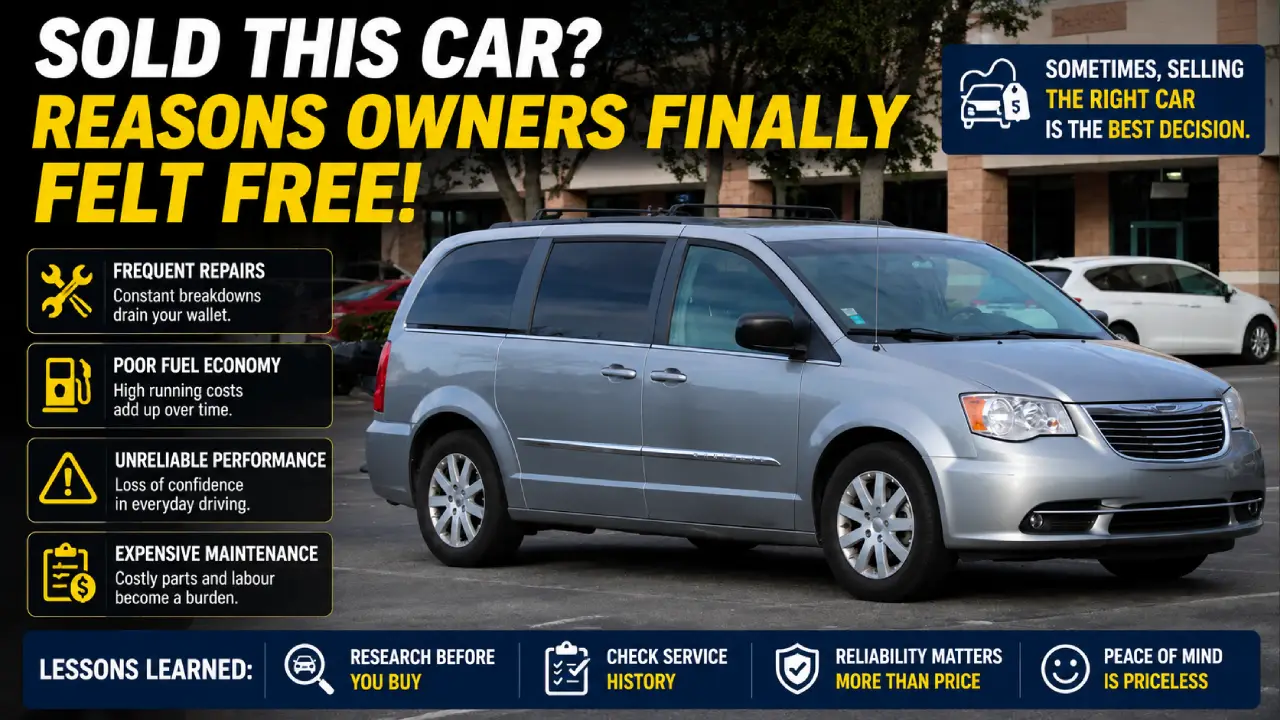
    Buying a car is exciting, but owning the wrong one can quickly become frustrating. From expensive repairs to constant breakdowns, many drivers eventually feel relieved after selling a vehicle that simply refused to be reliable.

    Why Selling a Problem Car Can Feel Like a Fresh Start

    Every new car purchase comes with high expectations. Most buyers believe their next vehicle will be more reliable, more comfortable, and less expensive to maintain than the previous one. However, ownership does not always go as planned. Unexpected repair bills, recurring mechanical issues, and poor reliability can turn what seemed like a great purchase into a daily headache.

    Moreover, the problem becomes even more common when buying a used vehicle. While many pre-owned cars offer excellent value, others may come with hidden maintenance issues that only appear after months of ownership. As a result, many drivers eventually decide that selling the car is the smartest financial decision.

    Common Reasons Owners Decide to Sell Their Cars

    Most owners do not sell a vehicle simply because they want something newer. Instead, repeated maintenance costs often become the biggest reason. Engine failures, transmission problems, electrical faults, and expensive suspension repairs can quickly increase the overall cost of ownership.

    Meanwhile, some drivers become frustrated by poor fuel economy or outdated technology. Others simply lose confidence in a vehicle that frequently breaks down during long trips. Once repair expenses begin exceeding the car’s actual value, selling often becomes the most practical solution.

    Reason for Selling Impact on Ownership
    Frequent Repairs High maintenance costs and downtime
    Poor Reliability Loss of confidence during daily driving
    Low Fuel Efficiency Higher running expenses
    Expensive Spare Parts Costly long-term ownership
    Electrical Issues Repeated workshop visits

    Lessons Buyers Can Learn Before Purchasing Their Next Car

    However, selling a troublesome vehicle often teaches valuable lessons. Smart buyers now spend more time checking service records, accident history, warranty coverage, and ownership costs before making a purchase. A professional pre-purchase inspection can also help identify hidden mechanical problems that may not be visible during a test drive.

    Furthermore, researching long-term reliability ratings and customer reviews provides a better understanding of real-world ownership experiences. Spending a little extra time before buying can save thousands in future repair costs.

    Total Cost of Ownership Matters More Than Purchase Price

    Many buyers focus only on the sticker price, but the real expense comes after the purchase. Insurance, servicing, fuel, tyre replacement, and unexpected repairs all contribute to the total cost of ownership. Therefore, a slightly more expensive but reliable vehicle may actually cost less over several years than a cheaper model with recurring mechanical issues.

    Choosing a dependable car also provides peace of mind, especially for families or people who rely on their vehicle every day. Reliability is often worth far more than a lower purchase price.

    Whether you are buying new or used, taking time to research reliability, maintenance history, and ownership costs can help you avoid future regret. A dependable vehicle should make driving enjoyable—not leave you looking for the fastest way to sell it.

    Frequently Asked Questions

    Q1. Why do many owners feel relieved after selling a car?
    Because recurring repairs, reliability issues, and rising maintenance costs can make ownership stressful and expensive.

    Q2. What should I check before buying a used car?
    Review the service history, accident records, ownership details, warranty status, and get the car inspected by a trusted mechanic.

    Q3. Is a cheaper used car always the better deal?
    Not necessarily. A reliable car with slightly higher upfront pricing often costs less in maintenance over the long term.